
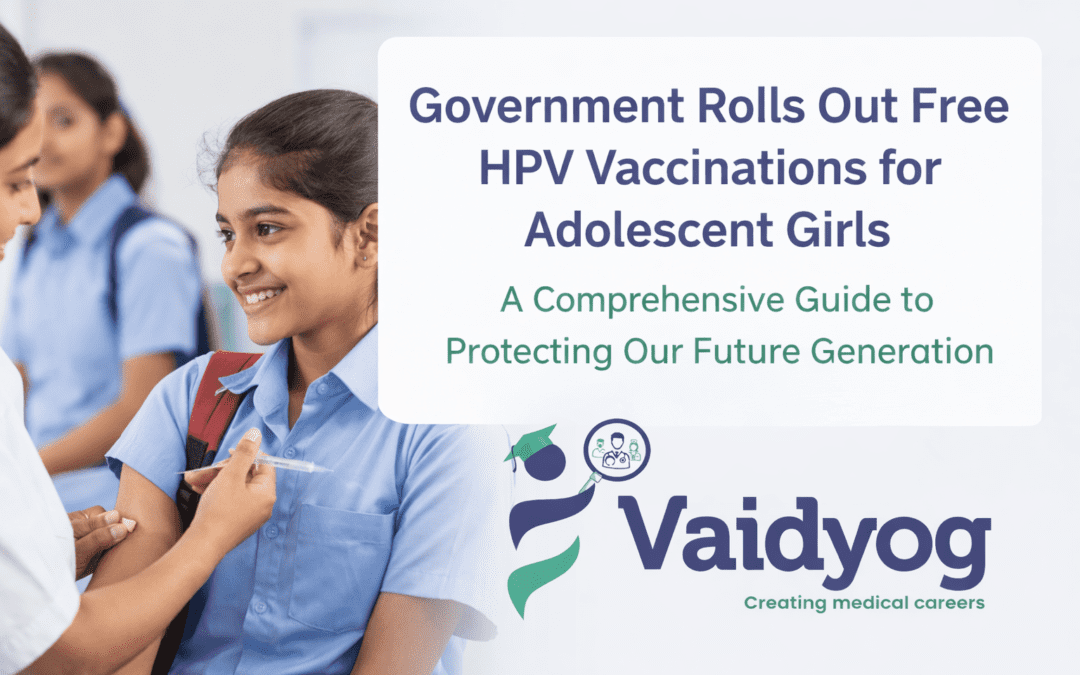
Introduction: A Landmark Moment in Public Health
In a transformative move that promises to reshape the landscape of women’s health in the country, the government has announced a landmark initiative to provide free HPV (Human Papillomavirus) vaccinations for adolescent girls. This ambitious public health program represents one of the most significant investments in preventive healthcare in recent decades, aiming to protect millions of young girls from the devastating effects of HPV infection and its potential progression to cervical cancer.
Cervical cancer continues to pose a serious threat to women’s health worldwide, with developing nations bearing a disproportionate burden of this preventable disease. The introduction of free HPV vaccinations for adolescent girls marks a pivotal shift from reactive treatment to proactive prevention, signaling the government’s commitment to building a healthier, more protected generation. This comprehensive blog delves into every aspect of this groundbreaking initiative, from understanding the science behind HPV and the vaccine to navigating the practicalities of access and addressing common concerns. Additionally, we explore how this initiative creates opportunities for healthcare professionals and how platforms like Vaidyog are connecting talented individuals with meaningful careers in the medical field.
Understanding HPV: The Invisible Threat
What is Human Papillomavirus?
Human Papillomavirus, commonly known as HPV, represents a group of more than 200 related viruses, with approximately 40 types capable of infecting the genital areas of both men and women. These viruses are transmitted primarily through intimate skin-to-skin contact, making them among the most common sexually transmitted infections globally. The ubiquity of HPV is staggering—most sexually active individuals will contract at least one type of HPV at some point in their lives, often without ever knowing they have been infected.
What makes certain strains of HPV particularly dangerous is their ability to cause cellular changes that may lead to cancer over time. While the body’s immune system successfully clears most HPV infections within two years without causing any lasting harm, persistent infections with high-risk HPV types can result in the development of precancerous lesions and eventually progress to cervical cancer. Other cancers linked to HPV include cancers of the anus, penis, vagina, vulbara, and oropharynx, though cervical cancer remains the most common and well-studied consequence of persistent HPV infection.
The Link Between HPV and Cervical Cancer
Cervical cancer develops when abnormal cells in the cervix grow out of control. The cervix is the lower part of the uterus that connects to the vagina, and it is particularly vulnerable to HPV infection due to its location and the nature of its cellular structure. Medical research has established beyond doubt that persistent infection with high-risk HPV types, particularly HPV 16 and HPV 18, is responsible for approximately 70% of all cervical cancer cases worldwide.
The progression from HPV infection to cervical cancer is typically slow, often taking 10 to 20 years or more. This extended timeline presents a valuable window of opportunity for prevention through vaccination and screening. The virus works by integrating its DNA into the host cells, disrupting normal cellular regulation and potentially triggering malignant transformation. Understanding this biological process underscores the critical importance of vaccination before exposure to the virus—ideally during adolescence, before individuals become sexually active.
Global Burden of Cervical Cancer
The global impact of cervical cancer cannot be overstated. It ranks as the fourth most common cancer among women worldwide, with an estimated 604,000 new cases and 342,000 deaths recorded in 2020 alone. The burden falls disproportionately on low- and middle-income countries, where limited access to screening and treatment services means that cervical cancer is often diagnosed at advanced stages when treatment options are less effective and outcomes are poorer.
In our own country, cervical cancer remains a significant public health challenge, affecting thousands of women each year and placing enormous emotional and economic burdens on families and communities. The introduction of free HPV vaccinations represents a strategic effort to扭转 this trend and eliminate cervical cancer as a public health threat within the coming decades. By protecting adolescent girls before they are exposed to the virus, this initiative has the potential to prevent thousands of future cases of cervical cancer and save countless lives.
The Government Initiative: Free HPV Vaccination Program
Program Overview and Objectives
The government’s free HPV vaccination program for adolescent girls represents the largest and most ambitious cervical cancer prevention initiative in the nation’s history. The program aims to provide free HPV vaccination to all eligible adolescent girls, typically targeting those between 9 and 14 years of age, with the goal of achieving high vaccination coverage and significantly reducing the incidence of cervical cancer in the long term.
The initiative operates through a multi-pronged approach that includes school-based vaccination programs, community health centers, and public health facilities. By leveraging existing healthcare infrastructure and educational institutions, the program seeks to ensure maximum accessibility and convenience for families across urban and rural areas alike. The government has allocated substantial resources to procurement, distribution, training, and awareness campaigns, recognizing that successful implementation requires coordinated efforts at all levels of the healthcare system.
Vaccine Selection and Safety Profile
The program utilizes domestically produced HPV vaccines that have undergone rigorous testing and approval from national regulatory authorities. These vaccines are designed to protect against the most common high-risk HPV types responsible for cervical cancer, typically providing protection against HPV 16 and HPV 18, with some vaccines offering broader protection against additional cancer-causing strains.
The safety profile of HPV vaccines has been extensively studied through clinical trials and post-marketing surveillance involving millions of recipients worldwide. Regulatory agencies and health organizations including the World Health Organization have consistently affirmed the safety and efficacy of these vaccines. Common side effects are generally mild and temporary, including soreness at the injection site, headache, low-grade fever, and nausea. Serious adverse events are extremely rare and far outweighed by the protective benefits of vaccination against HPV-related cancers.
Implementation Strategy and Distribution Network
The implementation of this massive vaccination program requires careful planning and robust infrastructure. The government has established an extensive distribution network that includes central storage facilities, regional cold chain points, and local vaccination sites. Maintaining the cold chain—ensuring vaccines remain at proper temperatures from manufacture to administration—is particularly critical for HPV vaccines, which are sensitive to heat and must be stored and transported under controlled conditions.
School-based vaccination has been identified as the primary delivery strategy, given its efficiency and ability to reach the target population in a coordinated manner. Teams of trained healthcare workers visit schools to administer vaccines, with prior consent from parents or guardians and appropriate health screening before vaccination. For girls not enrolled in school or those who miss school-based vaccination sessions, the program provides alternative access points through primary health centers, community health centers, and designated vaccination camps.
Monitoring and Evaluation Framework
A comprehensive monitoring and evaluation framework has been established to track the program’s progress, identify challenges, and ensure quality implementation. This includes real-time reporting systems to monitor vaccination coverage, adverse events following immunization, and vaccine wastage rates. Regular reviews and feedback mechanisms allow program managers to make data-driven decisions and implement improvements as needed.
The evaluation framework also incorporates research components to assess the program’s impact on HPV infection rates, precancerous lesions, and ultimately cervical cancer incidence. These long-term studies will provide valuable evidence on the effectiveness of the vaccination program and inform future public health strategies. By building a strong evidence base, the program aims to demonstrate the value of investment in preventive healthcare and potentially expand similar initiatives to other areas of disease prevention.
Who Is Eligible and How to Access the Vaccine
Age Criteria and Target Population
The free HPV vaccination program specifically targets adolescent girls, with the recommended age range being 9 to 14 years. This age window has been carefully selected based on extensive research demonstrating that the immune response to the HPV vaccine is strongest when administered at this age, and crucially, before potential exposure to the virus through sexual activity. Vaccination during the pre-adolescent years ensures optimal protection, as the body’s immune system produces a more robust and durable antibody response.
While the primary target population is girls aged 9-14, some regions may have expanded eligibility criteria based on local epidemiology and resource availability. Parents and guardians of girls outside this age range should consult with healthcare providers to understand available options, as catch-up vaccination may be recommended for older adolescents in certain circumstances. The emphasis on the target age group reflects both scientific evidence and practical considerations of program efficiency and impact.
Access Points and Vaccination Sites
Accessing the free HPV vaccine has been designed to be as convenient as possible for families. The primary access points include government and government-aided schools, where vaccination teams visit to administer vaccines to eligible students. Parents receive advance notification and consent forms, and vaccination occurs only after completed consent forms are returned. This school-based approach minimizes disruption to education and ensures high coverage within the target population.
For girls not attending school or those who miss school-based vaccination sessions, a network of public health facilities including primary health centers, community health centers, and district hospitals provide free HPV vaccination as part of their regular immunization services. Additionally, special vaccination camps may be organized in communities to improve accessibility, particularly in remote or underserved areas. The goal is to ensure that no eligible girl is denied access due to geographical, economic, or social barriers.
Documentation and Consent Requirements
Proper documentation is essential for program implementation and individual health records. Parents or guardians are required to provide informed consent before vaccination, typically through a consent form that explains the vaccine, its benefits, potential side effects, and the importance of completing the vaccination series. This informed consent process ensures that families can make educated decisions about vaccination and understand what to expect.
Each vaccinated girl receives a vaccination card documenting the vaccine received, date of administration, and due date for the next dose (if a multi-dose series is used). This card serves as an important health record and should be kept safely and presented when returning for subsequent doses. Healthcare providers also maintain registers and electronic records to track individual vaccination status and ensure follow-up for completion of the vaccination series.
The Science of HPV Vaccination: How It Works
Vaccine Technology and Mechanism
HPV vaccines work by stimulating the body’s immune system to recognize and fight specific types of HPV virus-like particles (VLPs) that resemble the actual virus but cannot cause infection or disease. These VLPs are composed of the outer shell of the HPV virus, which contains the antigens that trigger an immune response. When administered through injection, the immune system recognizes these particles as foreign and produces antibodies against them, creating immunological memory.
The key innovation in HPV vaccine technology is the use of recombinant DNA techniques to produce VLPs without using live virus, making the vaccines non-infectious and extremely safe. The immune system responds to these particles as if they were actual viruses, generating a robust and durable antibody response. Should the vaccinated individual be exposed to actual HPV virus in the future, their immune system is primed to recognize and neutralize the virus before it can establish infection or cause cellular changes.
Vaccine Efficacy and Duration of Protection
Clinical trials and real-world studies have demonstrated remarkable efficacy of HPV vaccines in preventing persistent infection with vaccine-targeted HPV types. In populations with high vaccination coverage, significant reductions have been observed in HPV infection rates, precancerous cervical lesions, and ultimately cervical cancer incidence. The vaccines have shown near-100% efficacy in preventing persistent infection and precancerous lesions caused by the HPV types included in the vaccine.
Research on the duration of protection indicates that HPV vaccines provide long-lasting immunity, with studies showing sustained antibody levels and protection for at least 10-15 years following vaccination. While the exact duration of protection is still being studied through ongoing research, mathematical models predict that protection may last for several decades or even a lifetime. Even if immunity wanes over time, the initial strong immune response and memory cells provide a foundation of protection that may prevent disease even when antibody levels decrease.
Types of HPV Vaccines Available
Several HPV vaccines have been developed and approved for use globally, each targeting different combinations of HPV types. The vaccines can be categorized based on their valency—the number of HPV types they protect against. Bivalent vaccines target HPV 16 and 18, the two types responsible for most cervical cancer cases. Quadrivalent vaccines add protection against HPV 6 and 11, which cause genital warts. The most recent nonavalent vaccines provide the broadest protection, covering seven high-risk HPV types (16, 18, 31, 33, 45, 52, and 58) in addition to HPV 6 and 11.
The specific vaccine used in the government program depends on various factors including availability, cost, and regulatory approval. All approved HPV vaccines have demonstrated excellent safety profiles and significant efficacy against their targeted HPV types. The choice of vaccine reflects a careful balance of public health considerations, with the goal of maximizing cancer prevention impact within available resources.
Benefits of HPV Vaccination: Beyond Cervical Cancer Prevention
Individual Protection and Peace of Mind
For adolescent girls and their families, HPV vaccination provides invaluable protection against a potentially deadly disease. Cervical cancer can be devastating, not only physically but emotionally and financially. Treatment often involves surgery, radiation, chemotherapy, or combinations of these approaches, with significant side effects and long recovery periods. By preventing HPV infection and subsequent cellular changes that lead to cancer, vaccination eliminates the need for such interventions and their associated burdens.
Beyond the direct physical protection, vaccination provides psychological peace of mind. Parents can take comfort in knowing they have taken a proactive step to protect their daughters from a significant health threat. For young women growing up, vaccination represents empowerment—an opportunity to take control of their health and future, making informed choices about their wellbeing from an early age.
Community Herd Immunity and Population-Level Impact
When vaccination rates reach sufficiently high levels within a population, the protective benefits extend beyond vaccinated individuals to the broader community through herd immunity. High HPV vaccination coverage reduces the overall circulation of the virus, decreasing the likelihood that even unvaccinated individuals will be exposed. This community protection is particularly important for those who cannot be vaccinated due to medical contraindications or other reasons.
At the population level, widespread HPV vaccination has the potential to dramatically reduce cervical cancer incidence and eventually eliminate cervical cancer as a public health problem. Countries that have achieved high HPV vaccination coverage are already observing significant declines in HPV infection rates and precancerous lesions. Modeling studies predict that with sustained high coverage, cervical cancer could become a rare disease within a few generations, representing one of the greatest success stories in cancer prevention.
Economic Benefits and Healthcare System Savings
The economic case for HPV vaccination is compelling. While the upfront cost of vaccination programs is substantial, the long-term savings in healthcare expenditures, lost productivity, and human suffering far outweigh the investment. Treating cervical cancer is expensive, involving diagnostic procedures, surgeries, hospitalizations, chemotherapy, radiation therapy, and long-term follow-up care. Prevention through vaccination eliminates these costs and the associated economic burdens on families and healthcare systems.
From a societal perspective, preventing cervical cancer means women can remain productive members of their families and communities, contributing to economic development rather than requiring care. The indirect benefits extend to children who do not lose their mothers to preventable cancer, families that are not plunged into poverty by catastrophic health expenditures, and healthcare systems that can redirect resources to other pressing needs. Investment in HPV vaccination thus yields returns across multiple dimensions.
Addressing Concerns and Myths About HPV Vaccination
Safety Concerns and Scientific Evidence
Despite the overwhelming evidence supporting HPV vaccine safety, some parents and individuals express concerns about potential side effects. It is essential to understand that all vaccines, including HPV vaccines, undergo extensive safety testing before approval and continue to be monitored after introduction into population programs. The most common side effects—soreness at the injection site, headache, and mild fever—are temporary and indicate that the immune system is responding to the vaccine.
Serious adverse events following HPV vaccination are extremely rare. Extensive research has found no causal link between HPV vaccination and chronic health conditions, autoimmune diseases, or fertility problems. The benefits of protection against cervical cancer and other HPV-related diseases far outweigh the risks of rare side effects. Health authorities worldwide, including the World Health Organization and national regulatory agencies, continue to monitor vaccine safety and affirm the favorable benefit-risk profile of HPV vaccines.
Misinformation and the Importance of Reliable Sources
The spread of misinformation about vaccines, including HPV vaccines, poses a significant challenge to public health. Misleading claims circulate on social media and other platforms, often lacking scientific basis and creating unnecessary fear. It is crucial to rely on information from credible sources such as government health departments, professional medical organizations, and established healthcare providers when making decisions about vaccination.
Parents and individuals with questions about HPV vaccination should consult healthcare providers who can provide accurate, evidence-based information tailored to specific circumstances. Healthcare professionals are trained to address concerns, provide factual information, and support informed decision-making. By engaging in open dialogue with trusted healthcare providers, families can overcome misinformation and make confident choices about HPV vaccination.
Cultural and Religious Considerations
In some communities, cultural or religious beliefs may influence attitudes toward vaccination, particularly vaccines related to sexually transmitted infections. It is important to address these concerns with sensitivity and respect while providing accurate information. HPV vaccination is a preventive measure against cancer, not an endorsement or permission for sexual activity. The timing of vaccination during adolescence is specifically chosen to provide protection before potential exposure, regardless of when sexual activity begins.
Community leaders, religious authorities, and healthcare providers can play important roles in addressing cultural concerns and promoting vaccination as an act of responsible healthcare and disease prevention. Many religious and community organizations have endorsed vaccination programs, recognizing their life-saving potential and alignment with values of protecting the vulnerable and promoting community health. Culturally appropriate communication strategies are essential for reaching diverse populations and ensuring equitable access.
The Critical Role of Healthcare Professionals in Vaccination Success
Training and Capacity Building
The success of the HPV vaccination program depends critically on the healthcare workforce responsible for vaccine delivery, counseling, and monitoring. Doctors, nurses, and other healthcare professionals require specialized training in HPV vaccine administration, cold chain management, adverse event recognition and management, and effective communication with adolescents and their families. The government has invested significantly in training programs to build capacity at all levels of the healthcare system.
Training extends beyond technical skills to include interpersonal and communication skills essential for addressing vaccine hesitancy and building trust. Healthcare providers must be equipped to have respectful, informative conversations with parents and adolescents, addressing concerns while emphasizing the benefits of vaccination. Ongoing supervision and support ensure that healthcare workers maintain high standards of practice and stay updated on the latest evidence and guidelines.
Career Opportunities in Public Health and Vaccination Programs
The implementation of large-scale vaccination programs creates numerous career opportunities for healthcare professionals. From program managers and epidemiologists to field workers and community health volunteers, a diverse workforce is needed to ensure successful implementation. These roles offer meaningful work with direct impact on community health, professional development opportunities, and the satisfaction of contributing to disease prevention on a large scale.


Vaidyog is India’s leading healthcare career and recruitment platform, built exclusively for medical and allied healthcare professionals. We connect doctors, nurses, paramedics, pharmacists, and healthcare institutions through verified job opportunities, career guidance, and industry-relevant insights.
Designed to bridge the gap between talent and opportunity, Vaidyog empowers healthcare professionals to discover the right roles faster while helping hospitals, clinics, and healthcare organizations hire trusted, qualified professionals with ease.
With a focus on innovation, transparency, and growth, Vaidyog is redefining how healthcare careers are built in India—making hiring smarter and career journeys stronger.