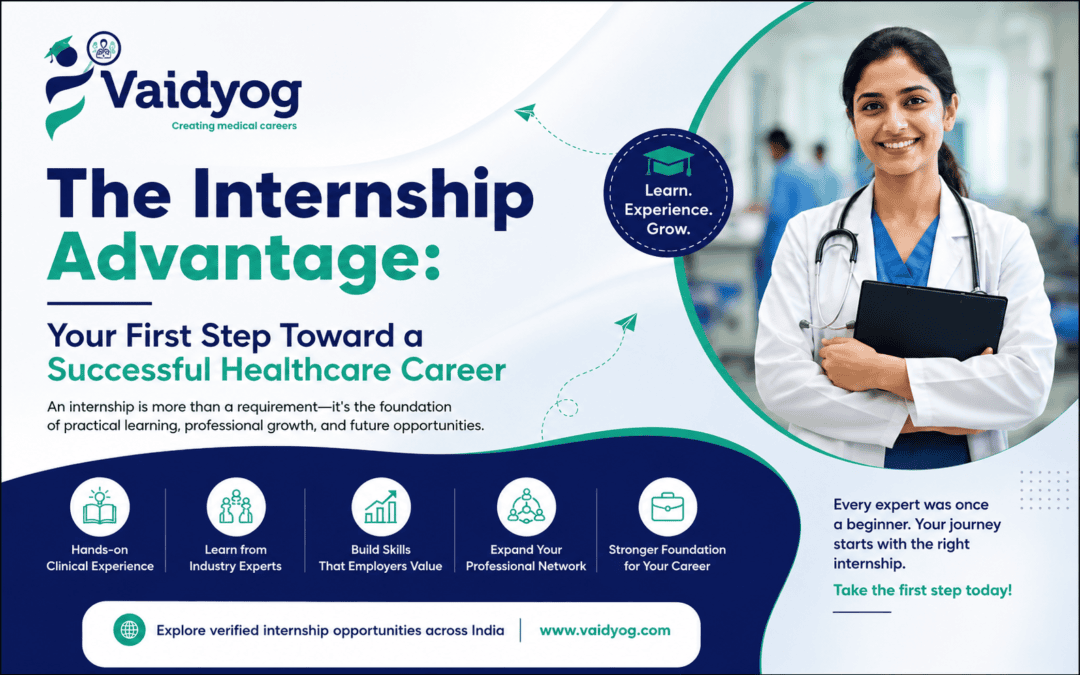
Healthcare is one of the few professions where learning never truly ends. Every patient, every diagnosis, and every clinical decision offers a new lesson. While classrooms provide the scientific knowledge required to enter the profession, it is practical exposure that transforms students into skilled healthcare professionals.
This is where internships become invaluable.
For students pursuing Medicine, Nursing, Pharmacy, Physiotherapy, Radiology, Medical Laboratory Technology, Occupational Therapy, Operation Theatre Technology, and other allied healthcare disciplines, internships are much more than a graduation requirement. They are the bridge between education and employment.
An internship introduces students to the realities of healthcare, helping them understand how hospitals function, how healthcare teams collaborate, and how patient-centered care is delivered.
Whether your goal is to become a doctor, nurse, pharmacist, physiotherapist, or healthcare technologist, the right internship can significantly influence your confidence, competence, and career growth.
What Is a Healthcare Internship?
A healthcare internship is a structured period of supervised practical training where students apply their academic knowledge in real clinical settings.
Unlike classroom education, internships provide hands-on experience under the guidance of experienced healthcare professionals. Students participate in patient care, observe medical procedures, learn hospital protocols, and understand how multidisciplinary healthcare teams work together.
Internships typically take place in:
- Multi-speciality hospitals
- Government hospitals
- Private hospitals
- Diagnostic laboratories
- Rehabilitation centers
- Community healthcare facilities
- Clinics
- Research institutions
The primary objective is simple: prepare students for real-world healthcare practice.
Why Internships Matter More Than Ever
Healthcare has evolved rapidly over the last decade.
Advancements in medical technology, electronic health records, telemedicine, robotic surgery, artificial intelligence, and patient-centered care have transformed the industry.
Employers today expect graduates to possess practical knowledge alongside academic excellence.
An internship helps students:
- Build clinical confidence
- Improve communication
- Understand hospital culture
- Learn professional ethics
- Adapt to fast-paced environments
- Gain workplace experience before graduation
Students who complete quality internships often transition into professional roles more smoothly than those with limited clinical exposure.
Bridging the Gap Between Theory and Practice
Textbooks explain diseases.
Internships teach you how patients experience them.
For example, nursing students may spend months studying patient care procedures. However, performing wound dressing, administering medication, communicating with anxious families, and monitoring recovery requires practical experience.
Similarly, pharmacy students learn drug classifications in classrooms but discover medication management, dispensing accuracy, inventory systems, and patient counseling during internships.
Healthcare education becomes meaningful when theory meets practice.
Developing Clinical Skills
One of the greatest benefits of internships is clinical skill development.
Students gradually become comfortable performing procedures under supervision while improving their technical accuracy and decision-making.
Common skills developed during internships include:
Patient Assessment
Students learn how to:
- Record patient history
- Measure vital signs
- Observe symptoms
- Document clinical findings
Clinical Procedures
Depending on the field, students may assist with:
- Blood collection
- Medication administration
- ECG procedures
- IV preparation
- Dressing wounds
- Sample collection
- Diagnostic imaging preparation
Infection Control
Internships reinforce:
- Hand hygiene
- Sterilization
- Biomedical waste management
- PPE protocols
- Patient safety practices
Emergency Preparedness
Students learn how healthcare teams respond during emergencies by observing:
- CPR
- Trauma care
- Emergency triage
- Critical care protocols
Learning Professional Communication
Healthcare is built on communication.
During internships, students interact with:
- Patients
- Families
- Doctors
- Nurses
- Pharmacists
- Laboratory staff
- Administrators
They learn how to:
- Explain procedures clearly
- Listen actively
- Show empathy
- Handle difficult conversations
- Communicate professionally within healthcare teams
These interpersonal skills often determine the quality of patient care.
Understanding Hospital Workflows
Hospitals are highly coordinated environments.
Internships help students understand how departments work together.
They observe interactions between:
- Emergency Department
- ICU
- Operation Theatre
- Radiology
- Pharmacy
- Laboratory
- Nursing Units
- Administration
This exposure builds systems thinking and improves workplace readiness.
Building Confidence
Many students feel nervous before entering their first clinical setting.
Internships gradually replace uncertainty with confidence.
Repeated exposure to patient care helps students:
- Stay calm under pressure
- Make informed decisions
- Follow clinical protocols
- Perform procedures confidently
- Work independently while knowing when to seek guidance
Confidence develops through experience—not theory alone.
Developing Soft Skills
Healthcare professionals require more than technical expertise.
Employers value candidates who demonstrate:
- Teamwork
- Leadership
- Accountability
- Adaptability
- Time management
- Critical thinking
- Emotional intelligence
- Professionalism
Internships provide daily opportunities to strengthen these essential workplace skills.
Networking with Healthcare Professionals
Internships introduce students to professionals who may shape their future careers.
Mentors often include:
- Senior doctors
- Nursing supervisors
- Pharmacists
- Department heads
- Laboratory managers
- HR professionals
These relationships can lead to:
- Career guidance
- Recommendation letters
- Job referrals
- Research opportunities
- Future employment
Professional networking begins much earlier than many students realize.
Improving Employability
Recruiters increasingly prefer candidates who already have practical healthcare experience.
Internships demonstrate:
- Commitment to the profession
- Workplace readiness
- Practical competence
- Professional discipline
- Ability to adapt quickly
Candidates with relevant internships often stand out during interviews because they can discuss real clinical experiences rather than only academic knowledge.
Choosing the Right Internship
Not all internships provide equal learning opportunities.
Before applying, students should evaluate whether the organization offers:
- Structured training programs
- Qualified mentors
- Diverse patient exposure
- Modern healthcare facilities
- Ethical clinical practices
- Hands-on learning opportunities
- Constructive feedback
- Professional work culture
Choosing the right internship can have a lasting impact on career development.
Common Challenges During Internships
Every internship comes with learning challenges.
Students may initially struggle with:
- Managing workload
- Long shifts
- Clinical documentation
- Patient communication
- Time management
- Balancing confidence with caution
These challenges are a normal part of professional growth. With guidance and practice, students gradually become more capable and resilient.
How to Make the Most of Your Internship
To maximize your learning experience:
- Be punctual and professional.
- Ask thoughtful questions.
- Take initiative whenever appropriate.
- Observe experienced professionals closely.
- Accept constructive feedback positively.
- Keep a record of your learning.
- Respect patient confidentiality.
- Build meaningful professional relationships.
A proactive attitude often creates more learning opportunities than simply completing assigned tasks.
The Future of Healthcare Careers
Healthcare continues to be one of the world’s fastest-growing industries.
With increasing demand for skilled professionals across hospitals, diagnostic centers, rehabilitation facilities, and telehealth services, practical experience has become a significant competitive advantage.
Students who begin building their professional skills early are better prepared for long-term career success.
How Vaidyog Helps Healthcare Students
Finding verified internships can often be challenging for students.
Many struggle to identify genuine opportunities that offer meaningful clinical exposure and professional mentoring.
Vaidyog bridges this gap by connecting Doctors, Nurses, Pharmacy students, and Allied Healthcare professionals with verified internship opportunities at reputed multi-speciality hospitals across India.
By simplifying internship discovery, Vaidyog helps aspiring healthcare professionals gain valuable experience, build confidence, and prepare for successful careers in the healthcare industry.
Whether you’re beginning your clinical journey or looking for the next step in your professional growth, Vaidyog provides a trusted platform to explore quality internship opportunities and connect with leading healthcare institutions.
Frequently Asked Questions (FAQs)
1. Why is an internship important for healthcare students?
An internship provides real-world clinical experience, helping students apply classroom knowledge, develop practical skills, improve confidence, and prepare for professional healthcare careers.
2. Who should apply for healthcare internships?
Healthcare internships are suitable for students pursuing Medicine, Nursing, Pharmacy, Physiotherapy, Radiology, Medical Laboratory Technology, Operation Theatre Technology, Occupational Therapy, and other allied healthcare programs.
3. When should I start looking for internships?
Students should begin exploring internship opportunities as soon as they become eligible according to their academic curriculum. Early planning allows access to better hospitals and structured training programs.
4. Do internships improve job opportunities?
Yes. Employers often prefer candidates with practical clinical experience because they adapt more quickly to professional healthcare environments.
5. What skills can I learn during a healthcare internship?
Internships help students develop clinical skills, patient communication, teamwork, documentation, time management, critical thinking, professionalism, and problem-solving abilities.