Introduction
The healthcare industry is undergoing rapid transformation, driven by technological advancements, increasing patient expectations, evolving regulations, and growing demand for quality healthcare services. Amid these changes, hospitals and healthcare organizations face a common challenge—ensuring they have access to qualified healthcare professionals who can deliver exceptional patient care while maintaining operational efficiency.
Medical staffing has emerged as one of the most important factors influencing the success and performance of healthcare facilities. Whether it is a multi-specialty hospital, diagnostic center, nursing home, clinic, or rehabilitation center, having the right workforce in place directly impacts patient outcomes, employee satisfaction, compliance standards, and overall organizational growth.
Healthcare professionals are the backbone of every medical institution. Doctors diagnose and treat illnesses, nurses provide continuous patient care, technicians support diagnostics and procedures, and administrative teams ensure smooth operations. When staffing levels are optimized, hospitals can function efficiently, improve patient experiences, and achieve better clinical outcomes.
At Vaidyog, we understand that healthcare excellence begins with exceptional talent. Through specialized healthcare staffing solutions, we help healthcare organizations build strong and reliable teams that contribute to long-term success.
Understanding Medical Staffing
Medical staffing refers to the process of recruiting, hiring, placing, and managing healthcare professionals across various departments within a healthcare facility. It involves identifying workforce requirements and ensuring that hospitals have access to qualified personnel who possess the necessary skills, certifications, and experience.
Healthcare staffing encompasses a wide range of professionals, including:
- Doctors and Specialists
- Registered Nurses
- Nurse Practitioners
- Medical Lab Technicians
- Radiology Technicians
- Pharmacists
- Physiotherapists
- Allied Healthcare Professionals
- Hospital Administrators
- Support and Non-Clinical Staff
Effective staffing goes beyond filling vacancies. It involves workforce planning, talent acquisition, retention strategies, succession planning, and ensuring the right mix of skills across departments.
Why Medical Staffing Matters in Healthcare
Healthcare is a people-driven industry. Unlike many sectors where automation can replace human intervention, healthcare relies heavily on skilled professionals who make critical decisions and provide compassionate care.
When hospitals experience staffing shortages, several challenges may arise:
- Increased patient wait times
- Higher risk of medical errors
- Employee burnout and fatigue
- Reduced patient satisfaction
- Lower staff morale
- Operational inefficiencies
- Increased turnover rates
Strategic medical staffing helps organizations overcome these challenges by ensuring adequate workforce availability and optimal resource allocation.
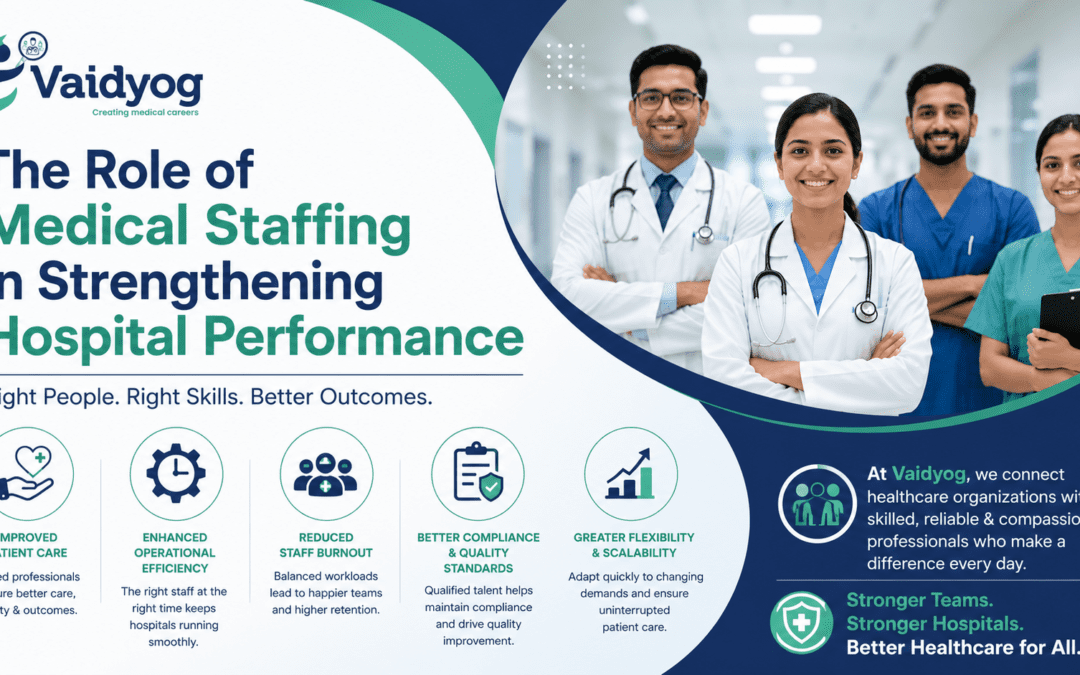
The Impact of Medical Staffing on Hospital Performance
1. Improved Patient Care and Safety
Patient care quality is directly linked to staffing levels. When healthcare professionals have manageable workloads, they can dedicate sufficient time to patient assessment, treatment, monitoring, and communication.
Benefits include:
- Reduced medication errors
- Faster response to patient needs
- Better monitoring of critical patients
- Enhanced treatment accuracy
- Improved patient recovery rates
Research consistently shows that hospitals with adequate staffing levels often achieve better patient outcomes and lower complication rates.
2. Enhanced Operational Efficiency
Operational efficiency is essential for hospitals seeking to maximize resources while maintaining high standards of care.
Proper staffing contributes to:
- Smooth patient flow management
- Reduced waiting times
- Faster admissions and discharges
- Improved scheduling and workflow
- Better coordination between departments
When every department has the required personnel, hospitals can operate more effectively and minimize disruptions.
3. Reduced Staff Burnout and Increased Employee Retention
Healthcare professionals often work under significant pressure. Staffing shortages frequently lead to:
- Extended work hours
- Overtime shifts
- Physical exhaustion
- Emotional stress
- Job dissatisfaction
Burnout can negatively affect both employees and patients. By maintaining appropriate staffing levels, hospitals can create healthier work environments that support employee well-being.
Benefits include:
- Higher job satisfaction
- Better employee engagement
- Lower turnover rates
- Improved workplace morale
- Stronger team collaboration
Retaining experienced healthcare professionals also reduces recruitment and training costs.
4. Better Compliance and Accreditation Readiness
Healthcare organizations must comply with strict regulatory and accreditation standards established by governing bodies.
Proper staffing supports:
- Accurate documentation
- Clinical protocol adherence
- Regulatory compliance
- Quality assurance programs
- Risk management initiatives
Hospitals pursuing NABH or other accreditation standards often require adequate staffing levels and qualified professionals to meet compliance requirements successfully.
5. Increased Patient Satisfaction
Patient satisfaction has become a key performance indicator for healthcare organizations.
Patients value:
- Timely care
- Clear communication
- Personalized attention
- Efficient service delivery
When staffing levels are optimized, healthcare professionals can spend more time addressing patient concerns and delivering compassionate care.
Positive patient experiences often lead to:
- Better hospital ratings
- Increased patient trust
- Higher patient retention
- Stronger community reputation
6. Greater Flexibility During Demand Surges
Healthcare demand can fluctuate unexpectedly due to:
- Seasonal illnesses
- Disease outbreaks
- Public health emergencies
- Organizational expansion
- Population growth
Hospitals must be prepared to scale their workforce quickly when demand increases.
Flexible staffing solutions allow healthcare organizations to:
- Address sudden shortages
- Manage emergency situations
- Maintain continuity of care
- Support new departments and services
7. Strengthening Specialized Healthcare Services
Many healthcare facilities require professionals with specialized expertise in areas such as:
- Cardiology
- Oncology
- Critical Care
- Emergency Medicine
- Radiology
- Laboratory Services
- Rehabilitation
Recruiting highly skilled specialists ensures hospitals can deliver advanced medical services while maintaining quality standards.
Challenges Facing Healthcare Workforce Management
Despite growing healthcare needs, the industry faces several workforce-related challenges.
Talent Shortages
Many regions experience shortages of nurses, specialists, technicians, and allied healthcare professionals.
High Competition for Skilled Professionals
Healthcare organizations compete aggressively to attract experienced talent.
Workforce Aging
A significant portion of the healthcare workforce is approaching retirement, creating future staffing gaps.
Changing Skill Requirements
Technological advancements require healthcare professionals to continuously upgrade their skills.
Employee Burnout
Work-related stress continues to impact recruitment and retention efforts across the industry.
Addressing these challenges requires strategic workforce planning and reliable staffing partnerships.
The Benefits of Partnering with a Healthcare Staffing Provider
Healthcare staffing partners help organizations streamline recruitment and workforce management processes.
Key advantages include:
Access to Qualified Talent
Staffing specialists maintain extensive networks of healthcare professionals across multiple specialties.
Faster Hiring Processes
Organizations can reduce vacancy periods and quickly fill critical positions.
Workforce Flexibility
Hospitals can scale staffing levels according to operational requirements.
Reduced Administrative Burden
Recruitment, screening, credential verification, and onboarding processes are managed efficiently.
Improved Workforce Stability
Consistent access to qualified professionals helps maintain continuity of care and operational performance.
How Vaidyog Supports Healthcare Staffing Needs
At Vaidyog, we recognize that healthcare excellence begins with the right people. We provide comprehensive medical staffing solutions designed to help hospitals, clinics, diagnostic centers, nursing homes, and healthcare organizations build high-performing teams.
Our staffing services focus on:
- Healthcare recruitment and placement
- Permanent staffing solutions
- Specialized healthcare talent acquisition
- Workforce planning support
- Skilled professional sourcing
- Rapid hiring assistance
By connecting healthcare providers with qualified professionals, Vaidyog helps organizations strengthen workforce capabilities, improve patient experiences, and maintain operational excellence.
Our commitment is to support healthcare institutions in building resilient teams that can meet today’s challenges and prepare for tomorrow’s opportunities.
Conclusion
Medical staffing is no longer simply a recruitment function—it is a strategic component of hospital performance and healthcare success. The quality of patient care, operational efficiency, employee satisfaction, compliance standards, and organizational growth all depend heavily on having the right healthcare professionals in place.
As healthcare demands continue to evolve, hospitals must prioritize workforce planning and talent management to remain competitive and deliver exceptional patient outcomes. Organizations that invest in effective staffing strategies are better positioned to improve service quality, reduce operational risks, and achieve long-term sustainability.
At Vaidyog, we are proud to support healthcare providers by delivering reliable medical staffing solutions that strengthen healthcare teams and contribute to better patient care. Together, we can build stronger healthcare organizations and healthier communities.
Frequently Asked Questions (FAQs)
1. What is medical staffing in healthcare?
Medical staffing is the process of recruiting, hiring, and placing qualified healthcare professionals such as doctors, nurses, technicians, and administrative staff within healthcare organizations.
2. Why is medical staffing important for hospitals?
Medical staffing ensures hospitals have the right workforce to deliver quality patient care, improve operational efficiency, maintain compliance, and support overall organizational performance.
3. How does proper staffing improve patient outcomes?
Adequate staffing allows healthcare professionals to provide better patient monitoring, reduce medical errors, respond faster to patient needs, and improve treatment effectiveness.
4. What challenges do hospitals face in healthcare staffing?
Common challenges include talent shortages, employee burnout, high turnover rates, workforce aging, and increasing demand for specialized healthcare professionals.
5. How can healthcare staffing agencies help hospitals?
Staffing agencies help hospitals access qualified talent, reduce hiring time, manage workforce fluctuations, and improve recruitment efficiency.
6. What types of healthcare professionals can be recruited through staffing services?
Staffing services can recruit doctors, nurses, lab technicians, radiology technicians, pharmacists, physiotherapists, administrators, and various allied healthcare professionals.