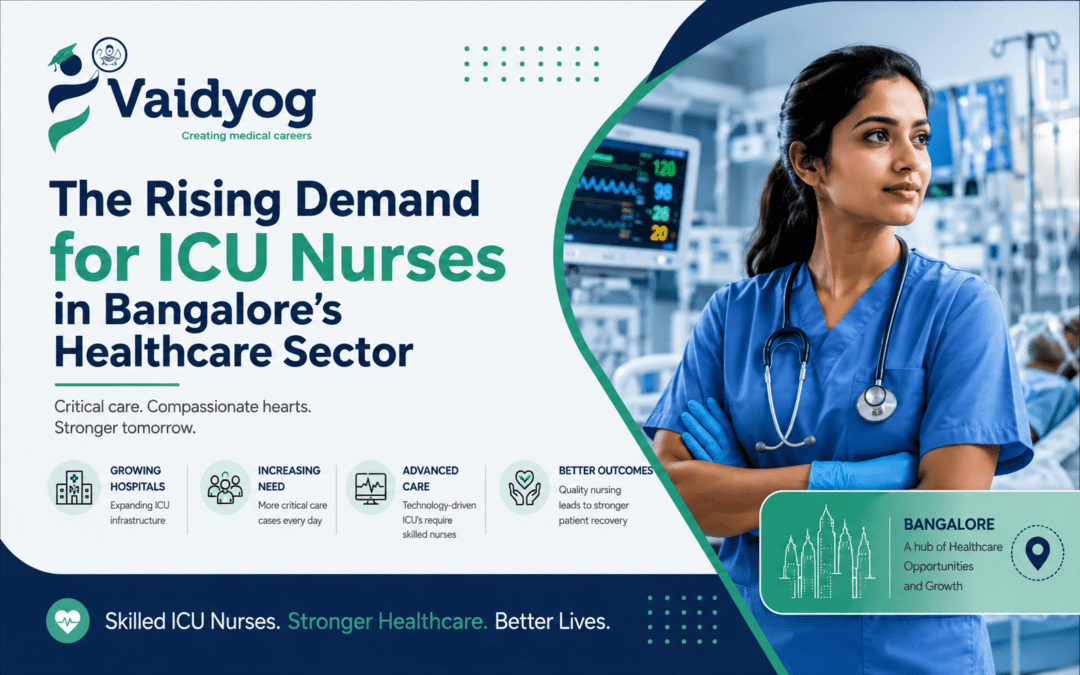
The healthcare industry in India is evolving rapidly, and Bangalore has emerged as one of the country’s leading hubs for advanced medical care. From multi-speciality hospitals to cutting-edge critical care centres, the city’s healthcare ecosystem is expanding at an unprecedented pace. Along with this growth comes an increasing demand for skilled ICU nurses who play a vital role in saving lives and supporting critical patient care.
Why ICU Nurses Are in High Demand
Intensive Care Unit (ICU) nurses are among the most essential professionals in modern healthcare. They are specially trained to care for critically ill patients who require constant monitoring, advanced medical support, and quick emergency response.
Several factors are contributing to the growing demand for ICU nurses in Bangalore:
1.Expansion of Multi-Speciality Hospitals
Bangalore is witnessing rapid growth in corporate hospitals, speciality healthcare centres, and emergency care facilities. As hospitals continue to expand their ICU capacity, the need for experienced ICU nurses is increasing significantly.
2.Rising Cases of Critical Illness
The growing prevalence of cardiac conditions, respiratory diseases, trauma cases, and post-surgical complications has increased the requirement for intensive care services. ICU nurses are at the forefront of managing these complex healthcare situations.
3.Technological Advancements in Healthcare
Modern ICUs now rely heavily on advanced monitoring systems, ventilators, infusion pumps, and digital healthcare technologies. Hospitals are seeking nurses who are trained to handle sophisticated medical equipment while ensuring high-quality patient care.
4.Increasing Focus on Patient Safety
Healthcare institutions today prioritize patient safety, infection control, and continuous monitoring. ICU nurses are critical in maintaining these standards and improving patient outcomes.
Skills Required for ICU Nurses
Working in an ICU requires more than just clinical knowledge. ICU nurses must possess a combination of technical expertise, emotional resilience, and quick decision-making abilities.
Some key skills include:
- Critical patient assessment
- Emergency response management
- Ventilator and life-support handling
- Communication and teamwork
- Time management under pressure
- Compassionate patient care
Hospitals in Bangalore are increasingly looking for professionals who can adapt to fast-paced healthcare environments while delivering excellent patient support.
Career Opportunities for ICU Nurses in Bangalore
The rise in healthcare infrastructure has created numerous opportunities for nursing professionals across Bangalore. ICU nurses can find employment in:
- Multi-speciality hospitals
- Cardiac care centres
- Trauma and emergency units
- Neonatal and pediatric ICUs
- Surgical ICUs
- Private healthcare facilities
With experience and specialization, ICU nurses can also advance into leadership roles such as nurse supervisors, critical care educators, or hospital administrators.
Salary and Career Growth
ICU nursing is becoming one of the most promising healthcare careers in India. Skilled ICU nurses often receive competitive salary packages, additional incentives, and opportunities for career progression.
Many healthcare organizations are also investing in training programs and certifications to enhance the skills of nursing professionals and improve critical care services.
The Future of ICU Nursing in India
As India’s healthcare sector continues to modernize, the importance of critical care professionals will only grow stronger. Bangalore, being a major healthcare and technology hub, is expected to remain a leading destination for ICU nursing careers.
For aspiring healthcare professionals, ICU nursing offers not only job stability but also the opportunity to make a meaningful impact on patients’ lives every single day.
Conclusion
The rising demand for ICU nurses in Bangalore reflects the rapid transformation of India’s healthcare industry. Skilled nursing professionals are becoming the backbone of critical care services, ensuring better patient outcomes and supporting advanced medical treatment across hospitals.
For healthcare organizations and job seekers looking to connect with the right opportunities in the healthcare industry, Vaidyog continues to bridge the gap through healthcare recruitment solutions, industry insights, and career opportunities across India’s growing medical sector.

Vaidyog is India’s leading healthcare career and recruitment platform, built exclusively for medical and allied healthcare professionals. We connect doctors, nurses, paramedics, pharmacists, and healthcare institutions through verified job opportunities, career guidance, and industry-relevant insights.
Designed to bridge the gap between talent and opportunity, Vaidyog empowers healthcare professionals to discover the right roles faster while helping hospitals, clinics, and healthcare organizations hire trusted, qualified professionals with ease.
With a focus on innovation, transparency, and growth, Vaidyog is redefining how healthcare careers are built in India—making hiring smarter and career journeys stronger.