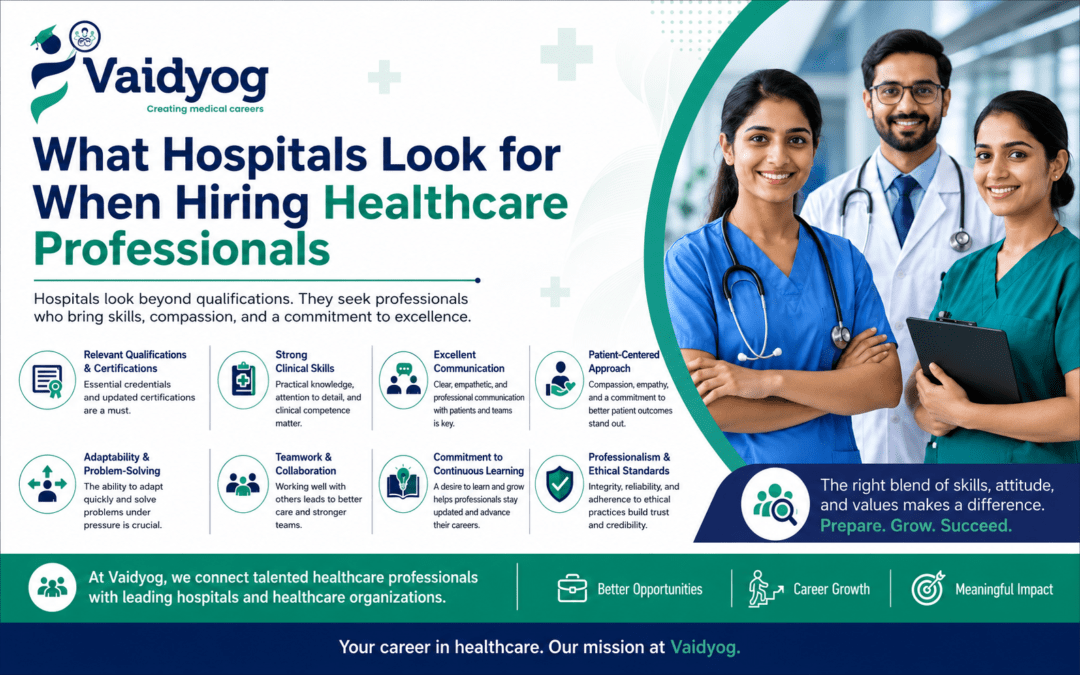
The healthcare industry is evolving rapidly, and hospitals today are looking beyond academic qualifications when hiring healthcare professionals. While clinical expertise remains a fundamental requirement, healthcare organizations increasingly seek candidates who can deliver quality patient care, collaborate effectively, adapt to changing environments, and contribute to overall operational excellence.
Whether you’re a nurse, medical laboratory technician, radiographer, pharmacist, physiotherapist, operation theatre technician, healthcare administrator, or allied healthcare professional, understanding what hospitals value can significantly improve your employability and help you build a successful medical career.
As healthcare systems become more patient-centric and technology-driven, employers are focusing on professionals who possess not only technical skills but also soft skills, emotional intelligence, and a commitment to continuous learning.
Why Hospitals Have Changed Their Hiring Approach
The healthcare landscape has witnessed remarkable changes over the last decade. Increased patient expectations, technological advancements, accreditation standards, and workforce shortages have transformed recruitment strategies.
Today, hospitals aim to hire professionals who can:
- Deliver safe and quality patient care.
- Adapt to evolving healthcare technologies.
- Work effectively in multidisciplinary teams.
- Maintain ethical and professional standards.
- Contribute to positive patient experiences.
- Support organizational growth and excellence.
As a result, healthcare recruiters evaluate candidates based on a combination of knowledge, skills, attitude, and values.
1. Relevant Qualifications and Certifications
Educational qualifications remain the foundation of every healthcare profession. Hospitals prioritize candidates who possess the required degrees, diplomas, licenses, and certifications necessary for their roles.
Why It Matters
Healthcare organizations must comply with regulatory and accreditation standards. Hiring qualified professionals ensures patient safety and legal compliance.
Hospitals Prefer Candidates Who:
- Have recognized educational credentials.
- Possess valid licenses and registrations.
- Keep certifications updated.
- Pursue specialized training programs.
- Participate in continuing education courses.
For example, a nurse with B.Sc. Nursing and certifications in BLS (Basic Life Support) and ACLS (Advanced Cardiac Life Support) often enjoys greater opportunities than someone with only basic qualifications.
Continuous upskilling demonstrates dedication and professionalism, which hospitals highly appreciate.
2. Strong Clinical Skills
Academic knowledge alone is not enough. Hospitals seek professionals who can confidently apply theoretical knowledge in real clinical situations.
Key Clinical Competencies Include:
- Patient assessment.
- Medication administration.
- Diagnostic procedures.
- Infection control practices.
- Documentation and record keeping.
- Emergency response management.
- Equipment handling and maintenance.
Why Clinical Competence Matters
Healthcare professionals make decisions that directly impact patient outcomes. Therefore, hospitals value individuals who possess:
- Accuracy and attention to detail.
- Critical thinking abilities.
- Confidence in clinical procedures.
- Understanding of safety protocols.
- Ability to work under pressure.
Candidates with internships, practical exposure, or previous work experience often have a competitive edge during recruitment.
3. Excellent Communication Skills
Healthcare is a collaborative profession that requires constant interaction with patients, families, doctors, nurses, and support staff.
Effective communication contributes significantly to patient safety and satisfaction.
Hospitals Value Professionals Who Can:
Explain Medical Information Clearly
Patients often feel anxious and confused. Healthcare professionals who simplify complex medical information help build trust and improve patient compliance.
Listen Actively
Understanding patient concerns allows professionals to provide compassionate and personalized care.
Collaborate with Multidisciplinary Teams
Quality healthcare depends on smooth communication among physicians, nurses, technicians, pharmacists, and administrators.
Maintain Professionalism
Healthcare workers frequently encounter stressful situations. Remaining calm and respectful is essential for maintaining positive relationships.
Strong communication skills reduce errors, enhance teamwork, and improve patient experiences.
4. Patient-Centered Approach
Modern healthcare revolves around patient satisfaction and quality outcomes. Hospitals seek professionals who genuinely care about the well-being of patients.
A Patient-Centered Professional:
- Demonstrates empathy and compassion.
- Respects patient dignity and privacy.
- Encourages patient participation.
- Provides emotional support.
- Prioritizes safety and comfort.
Why It Matters
Patient experiences influence hospital reputation and healthcare quality metrics. Professionals who consistently deliver compassionate care often become invaluable members of healthcare teams.
Empathy and kindness are qualities that no machine or technology can replace.
5. Adaptability and Problem-Solving Abilities
Healthcare environments are dynamic and unpredictable. Emergencies, changing protocols, and evolving technologies require professionals who can quickly adapt.
Hospitals Appreciate Professionals Who Can:
- Manage multiple responsibilities.
- Remain calm during emergencies.
- Think critically and make informed decisions.
- Solve problems efficiently.
- Adapt to new technologies and procedures.
For example, during pandemics or high patient volumes, adaptability becomes one of the most valuable qualities a healthcare professional can possess.
Those who remain solution-oriented and composed under pressure are highly respected in clinical settings.
6. Teamwork and Collaboration
Healthcare delivery is a collective effort involving numerous departments and specialties.
No healthcare professional works in isolation.
Strong Team Players:
- Respect colleagues and diverse opinions.
- Communicate openly.
- Share responsibilities.
- Support coworkers during challenging situations.
- Contribute to a positive workplace culture.
Benefits of Effective Collaboration
- Better patient outcomes.
- Reduced medical errors.
- Improved efficiency.
- Enhanced staff satisfaction.
- Stronger organizational performance.
Hospitals prefer candidates who foster teamwork and create harmonious work environments.
7. Commitment to Continuous Learning
Healthcare technologies, treatments, and protocols evolve constantly. Lifelong learning is essential for career growth and quality patient care.
Hospitals Value Professionals Who:
- Attend workshops and conferences.
- Pursue advanced certifications.
- Learn emerging healthcare technologies.
- Stay updated with evidence-based practices.
- Invest in professional development.
Continuous learning demonstrates ambition, adaptability, and dedication to excellence.
Professionals who actively enhance their skills are often considered for leadership roles and career advancement opportunities.
8. Professionalism and Ethical Standards
Healthcare professionals are entrusted with patient safety, privacy, and confidential information. Integrity and ethical conduct are non-negotiable qualities.
Professionalism Includes:
- Honesty and accountability.
- Reliability and punctuality.
- Respect for patients and colleagues.
- Confidentiality and privacy protection.
- Ethical decision-making.
- Compliance with regulations and protocols.
Why Professionalism Matters
Trust forms the foundation of healthcare. Patients and organizations rely on professionals who consistently uphold ethical standards and deliver responsible care.
Hospitals place immense value on individuals who demonstrate integrity in every aspect of their work.
9. Technology and Digital Healthcare Skills
Healthcare is becoming increasingly digital. Electronic Health Records (EHR), telemedicine platforms, AI-powered diagnostics, and automated systems are transforming patient care.
Hospitals Prefer Professionals Who Are Comfortable With:
- Electronic Medical Records (EMR).
- Hospital Information Systems (HIS).
- Diagnostic equipment and software.
- Telemedicine tools.
- Digital documentation systems.
- Data management and reporting.
Professionals with digital competency are better prepared for the future of healthcare.
10. Leadership and Time Management Skills
Even entry-level healthcare professionals benefit from leadership abilities.
Hospitals value candidates who can:
- Prioritize tasks efficiently.
- Handle responsibilities independently.
- Manage time effectively.
- Guide junior staff and students.
- Take initiative when required.
Leadership qualities often pave the way for supervisory and managerial roles in the future.
How Healthcare Professionals Can Increase Their Employability
To stand out in today’s competitive healthcare market, candidates should:
✔ Upgrade Skills Regularly
Pursue certifications and advanced training.
✔ Gain Practical Experience
Internships and clinical exposure strengthen confidence.
✔ Develop Soft Skills
Communication and empathy are equally important as technical knowledge.
✔ Build a Professional Resume
Highlight achievements, certifications, and clinical expertise.
✔ Stay Updated
Follow healthcare trends, technologies, and best practices.
✔ Prepare for Interviews
Research hospitals and practice common interview questions.
✔ Network Within the Industry
Professional connections often open doors to better opportunities.
The Future of Healthcare Hiring
Healthcare recruitment is becoming increasingly skill-based rather than qualification-based. Hospitals are looking for professionals who combine:
- Clinical excellence.
- Compassion and empathy.
- Communication skills.
- Adaptability.
- Teamwork.
- Digital literacy.
- Leadership potential.
- Commitment to lifelong learning.
Candidates who develop these qualities position themselves for long-term success in the healthcare industry.
Conclusion
Hospitals today seek much more than technical expertise. They look for healthcare professionals who combine clinical competence with empathy, communication, teamwork, adaptability, professionalism, and a patient-first mindset. As healthcare continues to evolve, professionals who continuously upgrade their skills and embrace lifelong learning will have a distinct advantage in building rewarding and sustainable careers.
At Vaidyog, we are dedicated to helping healthcare professionals build successful medical careers by connecting them with leading hospitals and healthcare organizations. Through career guidance, recruitment support, skill development, and access to quality job opportunities, Vaidyog empowers aspiring and experienced healthcare professionals to achieve career growth, make a meaningful impact, and shape the future of healthcare with confidence.
Frequently Asked Questions (FAQs)
1. What qualities do hospitals look for when hiring healthcare professionals?
Hospitals typically look for relevant qualifications, strong clinical skills, communication abilities, teamwork, adaptability, professionalism, empathy, and a commitment to continuous learning.
2. Are soft skills important in healthcare jobs?
Yes. Communication, empathy, teamwork, and problem-solving skills are essential because healthcare professionals interact with patients, families, and multidisciplinary teams daily.
3. How can I improve my chances of getting hired by a hospital?
You can improve your employability by gaining practical experience, updating certifications, developing communication skills, and staying current with healthcare technologies and industry trends.
4. Why do hospitals emphasize teamwork?
Healthcare delivery requires coordination among doctors, nurses, technicians, pharmacists, and support staff. Effective teamwork improves patient outcomes and reduces errors.