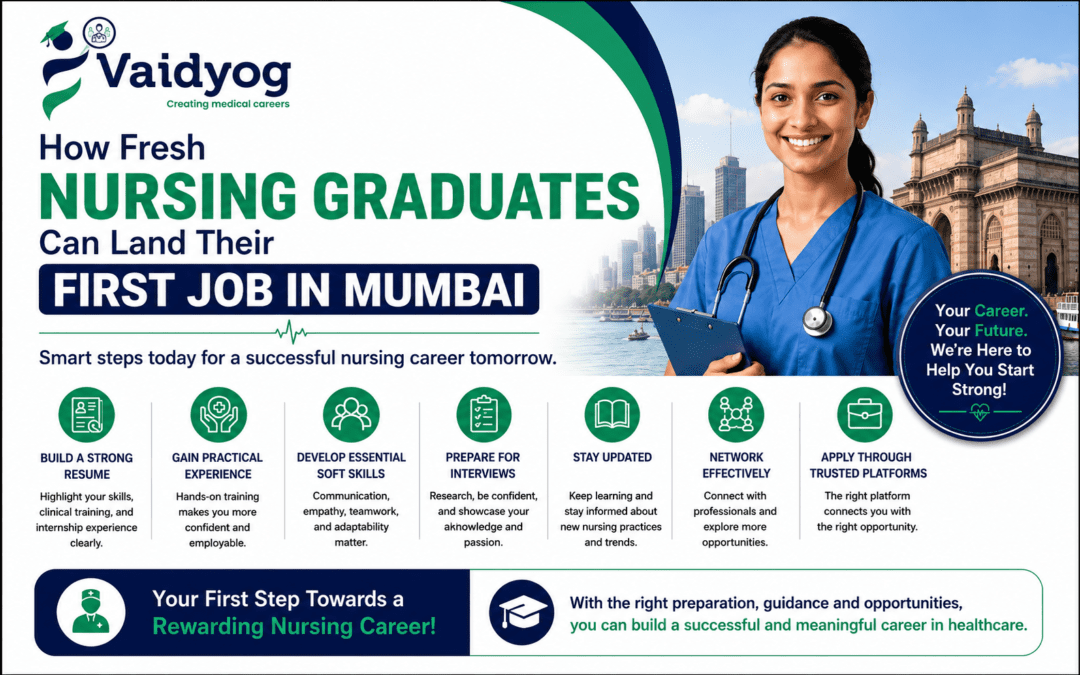
Mumbai is often referred to as the healthcare capital of India, home to some of the country’s most renowned hospitals, multispecialty healthcare centers, research institutions, and specialty clinics. Every year, thousands of nursing graduates enter the job market with aspirations of building successful careers in healthcare. While the demand for qualified nurses continues to grow, competition for the best opportunities can be challenging for fresh graduates.
The good news is that Mumbai’s expanding healthcare ecosystem offers numerous entry-level opportunities for nursing professionals who are prepared, proactive, and willing to learn. Whether you have completed a GNM, B.Sc Nursing, or Post Basic B.Sc Nursing program, understanding the hiring process and industry expectations can significantly improve your chances of securing your first nursing job.
In this guide, we will explore practical strategies, career tips, and job-search techniques that can help fresh nursing graduates find fresh nursing jobs in Mumbai and start a rewarding career in healthcare.
Understanding Mumbai’s Healthcare Job Market
Mumbai hosts a wide range of healthcare employers, including:
- Multispecialty hospitals
- Government hospitals
- Corporate healthcare chains
- Specialty clinics
- Rehabilitation centers
- Nursing homes
- Diagnostic centers
- Home healthcare services
- Medical research institutions
The city’s growing population and increasing healthcare needs have created consistent demand for skilled nursing professionals. Many hospitals regularly hire fresh graduates and provide structured training programs to help them transition into professional practice.
Build a Professional and Impactful Resume
Your resume serves as your introduction to potential employers. Recruiters often spend only a few seconds reviewing each application, making it essential to present your qualifications clearly and effectively.
Include Key Information Such As:
- Educational qualifications
- Nursing registration details
- Clinical training experience
- Internship details
- Certifications and workshops attended
- Technical skills
- Languages known
- Contact information
Resume Tips for Freshers
- Keep your resume concise and professional.
- Use a clean format with proper headings.
- Highlight practical exposure gained during training.
- Mention any awards, achievements, or leadership roles.
- Customize your resume according to the job description.
A well-structured resume can significantly increase your chances of receiving interview calls.
Maximize Your Clinical Training Experience
Clinical postings and internships provide valuable real-world experience that employers highly appreciate.
During your training, focus on developing:
- Patient assessment skills
- Medication administration
- Infection control practices
- Documentation procedures
- Emergency response knowledge
- Communication with patients and families
Maintain records of departments where you completed your clinical rotations, such as:
- Medical-Surgical Ward
- ICU
- Emergency Department
- Pediatrics
- Obstetrics and Gynecology
- Operation Theatre
Being able to discuss these experiences confidently during interviews demonstrates readiness for professional responsibilities.
Strengthen Your Clinical Knowledge
Healthcare organizations seek candidates who possess strong foundational nursing knowledge.
Key areas to revise include:
Patient Care
- Vital signs monitoring
- Basic nursing procedures
- Patient hygiene and comfort measures
Medication Administration
- Drug calculations
- Medication safety
- Administration routes
Infection Control
- Hand hygiene protocols
- PPE usage
- Biomedical waste management
Emergency Care
- CPR basics
- First aid procedures
- Emergency response protocols
Continuous learning helps fresh graduates remain confident and job-ready.
Develop Essential Soft Skills
Technical expertise alone is not enough to succeed as a nurse. Soft skills play a crucial role in patient care and workplace collaboration.
Communication Skills
Nurses communicate with:
- Patients
- Families
- Doctors
- Healthcare teams
Clear communication reduces errors and improves patient outcomes.
Empathy and Compassion
Patients often experience fear, anxiety, and discomfort. Compassionate care builds trust and enhances patient satisfaction.
Teamwork
Modern healthcare relies on multidisciplinary collaboration. Strong teamwork skills contribute to efficient patient care.
Problem-Solving Ability
Nurses frequently encounter unexpected situations that require quick thinking and sound judgment.
Prepare Effectively for Nursing Interviews
Interviews are an opportunity to demonstrate your knowledge, confidence, and professionalism.
Common Interview Questions
- Why did you choose nursing as a career?
- Tell us about your clinical training experience.
- How would you handle a difficult patient?
- What would you do during a medical emergency?
- Why do you want to work at our hospital?
Interview Preparation Tips
- Research the healthcare facility.
- Review common nursing procedures.
- Practice answering clinical scenario questions.
- Dress professionally.
- Arrive on time.
- Maintain positive body language.
Confidence combined with preparation can make a strong impression on recruiters.
Obtain Additional Certifications
Additional certifications can make your profile more attractive to employers.
Popular certifications include:
- Basic Life Support (BLS)
- Advanced Cardiac Life Support (ACLS)
- Infection Control Training
- Critical Care Nursing Courses
- Emergency Nursing Courses
- Patient Safety Programs
These certifications demonstrate initiative and commitment to professional development.
Build Your Professional Network
Networking can open doors to opportunities that may not always be publicly advertised.
Ways to Network
- Connect with nursing faculty members.
- Join nursing associations.
- Attend healthcare conferences.
- Participate in hospital recruitment drives.
- Engage with healthcare professionals on professional networking platforms.
Building relationships within the healthcare community can help you discover valuable career opportunities.
Leverage Digital Job Portals
Today, many hospitals use online recruitment platforms to hire nursing professionals.
When applying online:
- Complete your profile thoroughly.
- Upload an updated resume.
- Set job alerts.
- Apply regularly.
- Track your applications.
Healthcare-focused recruitment platforms often provide access to specialized nursing opportunities that align with your qualifications and career goals.
Understand Nursing Career Growth Opportunities
Your first nursing job is only the beginning of your professional journey.
Potential career pathways include:
Staff Nurse
The most common entry-level role for fresh graduates.
ICU Nurse
Specialized care for critically ill patients.
Emergency Department Nurse
Fast-paced environment managing urgent cases.
Operation Theatre Nurse
Assisting during surgical procedures.
Infection Control Nurse
Focus on hospital infection prevention programs.
Nurse Educator
Training future nursing professionals.
Nursing Supervisor
Managing nursing teams and operations.
Continuous learning and experience can lead to leadership and specialized clinical roles.
Common Mistakes Fresh Nursing Graduates Should Avoid
Many candidates unknowingly reduce their chances of getting hired by making avoidable mistakes.
Avoid These Errors:
- Submitting incomplete resumes
- Applying without reading job descriptions
- Failing to prepare for interviews
- Ignoring skill development
- Not following up after applications
- Underestimating the importance of communication skills
Being proactive and professional can help you stand out from other applicants.
Tips for Success During Your First Nursing Job
Once you secure your first role, focus on continuous improvement.
Key Success Tips
- Be punctual and disciplined.
- Seek feedback from senior nurses.
- Stay updated with hospital protocols.
- Maintain accurate documentation.
- Prioritize patient safety.
- Continue learning and upgrading your skills.
Your first year as a nurse will be a valuable learning experience that shapes your future career.