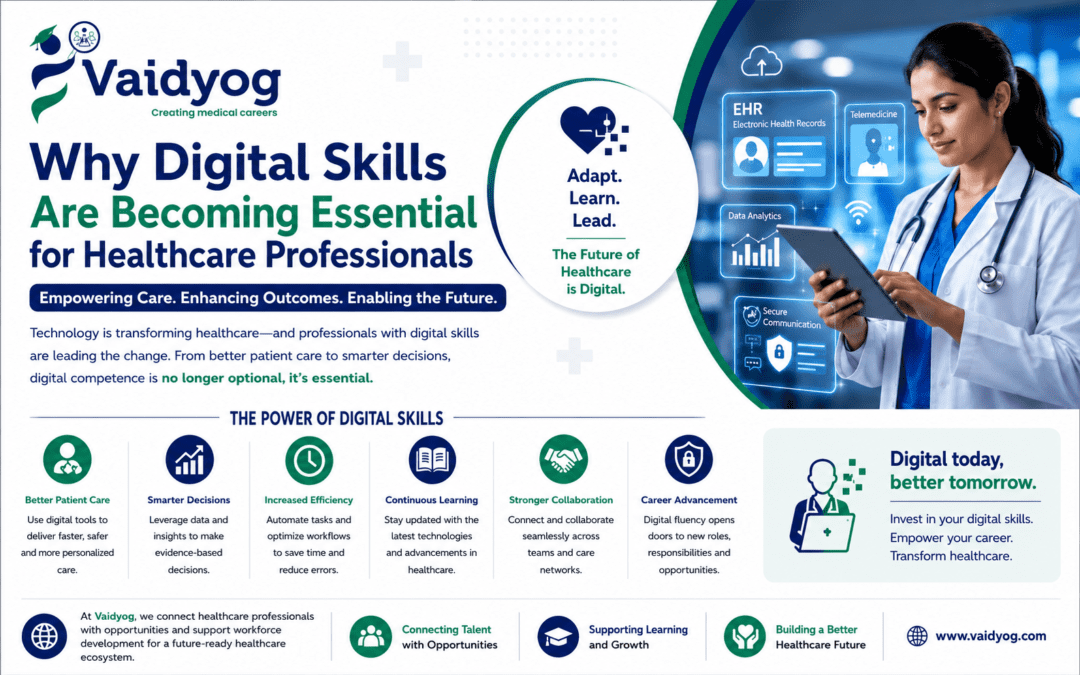
The healthcare industry is experiencing one of the most significant transformations in its history. Rapid advancements in digital technologies are changing how healthcare professionals diagnose diseases, communicate with patients, manage records, and deliver treatment. From telemedicine and electronic health records (EHRs) to artificial intelligence (AI) and wearable health devices, technology has become deeply integrated into everyday clinical practice.
In this evolving landscape, digital skills are no longer considered an added advantage—they are a necessity. Healthcare professionals who embrace digital tools and continuously upgrade their knowledge are better equipped to provide high-quality patient care, improve efficiency, and remain competitive in a rapidly changing job market.
The Digital Transformation of Healthcare
Healthcare systems worldwide are increasingly adopting digital solutions to enhance patient outcomes and streamline operations. Hospitals, clinics, diagnostic centers, and healthcare organizations are leveraging technology to improve accessibility, reduce medical errors, and optimize workflows.
Several factors are driving this transformation:
- Increased adoption of Electronic Health Records (EHRs)
- Growth of telemedicine and remote consultations
- Rising use of AI and machine learning in diagnostics
- Expansion of wearable devices and remote patient monitoring
- Demand for data-driven healthcare decisions
- Need for better communication and collaboration among healthcare teams
As these technologies become standard across healthcare settings, professionals must develop the skills needed to navigate and utilize them effectively.
Why Digital Skills Matter More Than Ever
Healthcare professionals are no longer expected to rely solely on clinical expertise. Modern healthcare environments require individuals who can combine medical knowledge with technological competence.
Digital proficiency enables professionals to:
- Deliver faster and more accurate care.
- Improve patient safety and reduce errors.
- Enhance communication among healthcare teams.
- Manage large volumes of patient information efficiently.
- Adapt to changing healthcare technologies.
- Increase productivity and reduce administrative burdens.
- Expand access to care through virtual consultations.
- Strengthen career opportunities and employability.
Healthcare employers increasingly seek candidates who possess both clinical skills and digital capabilities, making technological literacy an important aspect of career development.
Key Digital Skills Healthcare Professionals Need
1. Electronic Health Records (EHR) Management
Electronic Health Records have replaced traditional paper-based documentation in many healthcare facilities. EHR systems allow healthcare providers to store, access, and update patient information efficiently.
Professionals need to understand how to:
- Document patient encounters accurately.
- Access medical histories and lab reports.
- Maintain confidentiality and data security.
- Navigate healthcare software systems efficiently.
Effective EHR management improves continuity of care and helps reduce medical errors.
2. Telemedicine and Virtual Care Competencies
Telemedicine has transformed healthcare delivery by enabling remote consultations and follow-up care. Since the pandemic, virtual healthcare services have become an integral part of patient management.
Healthcare professionals should be comfortable with:
- Conducting video consultations.
- Using telehealth platforms.
- Managing virtual appointments.
- Communicating effectively with patients remotely.
- Maintaining privacy and security during digital interactions.
Telemedicine expands access to healthcare services and improves convenience for patients and providers alike.
3. Data Literacy and Analytics
Healthcare generates enormous amounts of information every day. Professionals who understand how to interpret and utilize data can contribute to evidence-based decision-making and improved patient outcomes.
Data literacy involves:
- Understanding clinical metrics and reports.
- Analyzing patient trends.
- Monitoring outcomes and quality indicators.
- Supporting population health initiatives.
- Making informed clinical decisions based on data.
As healthcare becomes increasingly data-driven, analytical skills are becoming essential across all specialties.
4. Digital Communication and Collaboration
Healthcare is a team effort involving physicians, nurses, pharmacists, technicians, and administrative staff. Efficient communication is critical for delivering quality care.
Digital communication tools include:
- Secure messaging platforms.
- Scheduling systems.
- Collaboration software.
- Digital handover systems.
- Electronic referral systems.
Strong digital communication skills improve coordination and reduce delays in patient care.
5. Artificial Intelligence Awareness
Artificial Intelligence is revolutionizing healthcare by assisting with diagnostics, predictive analytics, workflow automation, and personalized medicine.
Healthcare professionals do not need to become software engineers, but they should understand:
- Basic AI concepts.
- How AI supports diagnostics.
- Predictive healthcare models.
- Limitations and ethical considerations of AI.
- Human oversight in AI-assisted decisions.
AI is expected to complement—not replace—healthcare professionals, making AI awareness increasingly valuable.
6. Cybersecurity and Data Privacy Awareness
Healthcare organizations store highly sensitive patient information. Cybersecurity threats are increasing, making data protection a critical responsibility.
Professionals should understand:
- Password security practices.
- Phishing and cyberattack prevention.
- Data confidentiality regulations.
- Safe sharing of patient information.
- Compliance with healthcare privacy standards.
Protecting patient data is essential for maintaining trust and ensuring regulatory compliance.
7. Remote Patient Monitoring Technologies
Wearable devices and connected health technologies are changing chronic disease management and preventive care.
Healthcare professionals are increasingly using:
- Smart watches and wearable sensors.
- Blood glucose monitoring devices.
- Remote ECG systems.
- Home-based monitoring platforms.
Understanding these technologies enables providers to deliver more proactive and personalized care.
8. Mobile Health Applications
Mobile health (mHealth) applications empower patients to manage medications, track symptoms, and communicate with healthcare providers.
Professionals should be familiar with:
- Patient engagement apps.
- Medication reminder systems.
- Fitness and wellness applications.
- Digital symptom trackers.
- Remote follow-up tools.
These technologies improve patient participation and treatment adherence.
How Digital Skills Improve Patient Outcomes
Technology contributes directly to better healthcare delivery by enabling:
Faster Diagnosis
Digital tools provide immediate access to patient histories, laboratory reports, and imaging studies, leading to quicker interventions.
Improved Accuracy
Electronic systems reduce transcription errors and enhance medication safety.
Better Coordination
Healthcare teams can collaborate seamlessly using integrated platforms.
Increased Accessibility
Telemedicine ensures patients receive care regardless of geographical barriers.
Personalized Care
Data analytics and AI help tailor treatments to individual patient needs.
Ultimately, digital competence enhances both efficiency and quality of care.
Digital Skills Across Different Healthcare Roles
Nurses
Nurses utilize digital skills for:
- Electronic charting.
- Medication administration systems.
- Remote monitoring.
- Virtual patient education.
- Communication with multidisciplinary teams.
Physicians
Doctors increasingly depend on:
- Clinical decision support systems.
- Telemedicine platforms.
- AI-assisted diagnostics.
- Digital imaging technologies.
Laboratory Professionals
Laboratory personnel use:
- Automated analyzers.
- Laboratory Information Systems (LIS).
- Data interpretation tools.
Pharmacists
Pharmacists rely on:
- Electronic prescriptions.
- Drug interaction databases.
- Inventory management software.
Healthcare Administrators
Administrative professionals require expertise in:
- Hospital information systems.
- Data analytics.
- Revenue cycle management.
- Workforce management technologies.
The Growing Demand for Digitally Skilled Healthcare Professionals
Healthcare employers are actively seeking professionals who can thrive in technology-driven environments. Candidates with digital competencies often enjoy:
- Greater career opportunities.
- Higher employability.
- Faster career advancement.
- Increased workplace efficiency.
- Better adaptability to changing healthcare trends.
As hospitals continue their digital transformation journey, professionals with technology skills will remain highly sought after.
Continuous Learning Is the Future
Technology evolves rapidly, making continuous learning essential. Healthcare professionals should invest in:
Online Certifications
Courses in health informatics, telemedicine, AI, and digital healthcare can strengthen career prospects.
Workshops and Training Programs
Regular upskilling helps professionals stay current with emerging technologies.
Professional Development Programs
Organizations increasingly provide digital training opportunities for employees.
Lifelong Learning
Continuous education ensures healthcare professionals remain future-ready and resilient.
Preparing for the Future of Healthcare
The healthcare workforce of tomorrow will require a balance between compassionate patient care and technological expertise. Emerging innovations such as AI-assisted diagnostics, robotic surgery, precision medicine, and predictive analytics will further increase the importance of digital literacy.
Healthcare professionals who embrace technology today will be better prepared to lead the healthcare industry of tomorrow.
Conclusion
The future of healthcare belongs to professionals who can combine clinical excellence with digital competence. As technology becomes deeply embedded in patient care, healthcare organizations are looking for individuals who can adapt, innovate, and thrive in a digitally connected environment.
At Vaidyog, we understand that healthcare transformation extends beyond recruitment. By connecting healthcare professionals with leading opportunities and supporting workforce development, Vaidyog is committed to building a future-ready healthcare ecosystem where talent and technology work together to deliver better patient outcomes. Whether you’re exploring new career paths or searching for clinical jobs, embracing digital skills will help you stay competitive and succeed in the evolving healthcare landscape.
Frequently Asked Questions (FAQs)
1. Why are digital skills important for healthcare professionals?
Digital skills help healthcare professionals improve patient care, manage electronic records efficiently, communicate effectively, and adapt to modern healthcare technologies.
2. What digital skills are most important in healthcare?
Some of the most important digital skills include:
- Electronic Health Records (EHR) management
- Telemedicine platforms
- Data analysis and interpretation
- Digital communication tools
- Cybersecurity awareness
- Artificial intelligence literacy
3. Do healthcare professionals need coding skills?
No. Most healthcare professionals do not need programming knowledge. However, understanding digital tools and emerging technologies is increasingly beneficial.
4. How does telemedicine benefit healthcare professionals?
Telemedicine allows providers to deliver remote consultations, improve accessibility, increase efficiency, and maintain continuity of care for patients.
5. Can digital skills improve career opportunities in healthcare?
Yes. Healthcare employers increasingly prefer candidates with strong digital competencies, making these skills valuable for career growth and access to better clinical jobs.