Healthcare is one of the most demanding and dynamic industries in the world. It relies heavily on clinical expertise, advanced medical technology, and specialized technical knowledge to deliver effective patient care. However, while technical skills are essential for diagnosis, treatment, and healthcare operations, they are only one part of the equation.
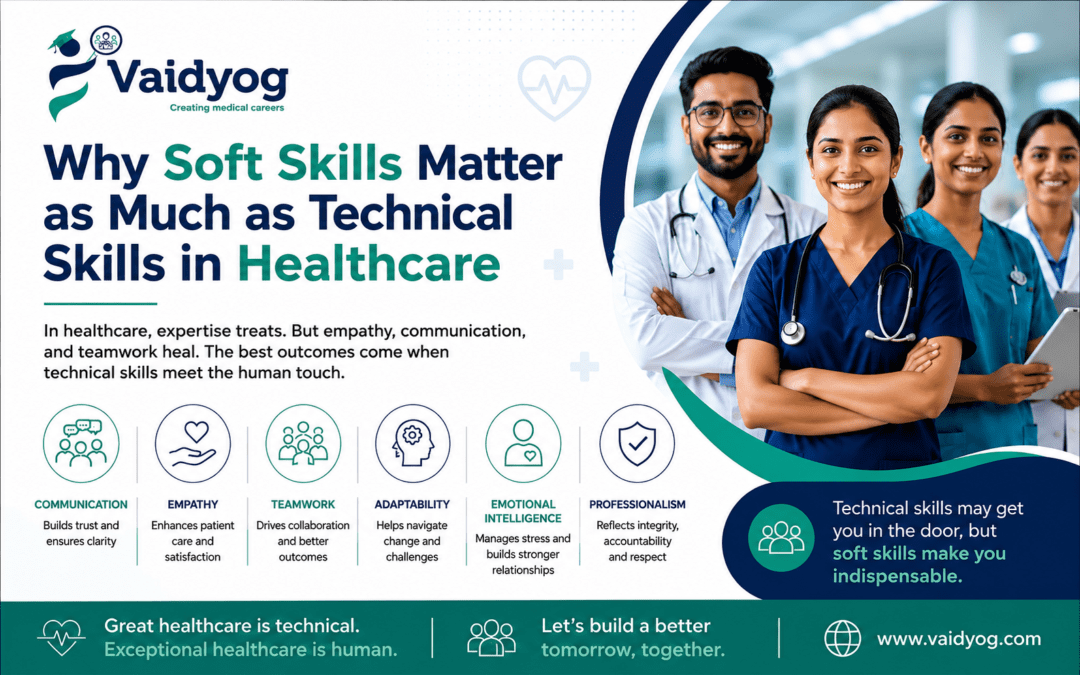
The human side of healthcare is equally important. Patients are not just medical cases; they are individuals experiencing uncertainty, stress, and vulnerability. The ability of healthcare professionals to communicate effectively, demonstrate empathy, collaborate with colleagues, and adapt to changing circumstances can significantly influence patient outcomes and overall healthcare quality.
As healthcare systems continue to evolve, organizations are increasingly recognizing that soft skills are just as important as technical competencies in creating exceptional patient experiences and high-performing healthcare teams.
Understanding Soft Skills in Healthcare
Soft skills are personal attributes and interpersonal abilities that enable individuals to interact effectively with others. Unlike technical skills, which are learned through education and training, soft skills influence how professionals communicate, solve problems, and build relationships.
Key soft skills in healthcare include:
- Communication
- Empathy
- Teamwork
- Emotional Intelligence
- Adaptability
- Leadership
- Problem-Solving
- Conflict Resolution
- Time Management
- Active Listening
These skills help healthcare professionals navigate complex situations while maintaining patient-centered care.
Beyond Clinical Competence
A doctor may have extensive medical knowledge, a nurse may possess exceptional clinical skills, and a technician may be highly proficient with advanced equipment. However, technical expertise alone does not guarantee positive patient experiences.
Patients often judge their healthcare experience based on how they are treated, how well information is explained, and whether they feel heard and respected. Healthcare professionals who combine technical excellence with strong interpersonal skills are better equipped to deliver holistic care that addresses both medical and emotional needs.
Communication Builds Trust and Improves Outcomes
Effective communication is one of the most critical skills in healthcare. Clear and accurate communication helps ensure that patients understand their diagnoses, treatment plans, medications, and follow-up instructions.
Strong communication skills can:
- Reduce misunderstandings and medical errors
- Improve patient compliance with treatment plans
- Increase patient satisfaction
- Strengthen relationships between healthcare providers and patients
- Enhance collaboration among multidisciplinary teams
Healthcare professionals frequently communicate with patients, families, colleagues, and administrators. The ability to convey information clearly and compassionately helps create trust and confidence in the care process.
Empathy Enhances Patient-Centered Care
Empathy is the ability to understand and share the feelings of another person. In healthcare, empathy plays a crucial role in building meaningful connections with patients.
When healthcare professionals demonstrate empathy, patients often feel:
- More comfortable discussing their concerns
- Better understood and supported
- Less anxious about treatment procedures
- More confident in their healthcare providers
Research consistently shows that empathetic interactions contribute to higher patient satisfaction and stronger provider-patient relationships. Empathy transforms healthcare from a transactional service into a compassionate experience.
Teamwork Drives Better Healthcare Delivery
Healthcare is rarely delivered by a single professional. Modern healthcare relies on multidisciplinary teams that include physicians, nurses, pharmacists, therapists, technicians, administrators, and support staff.
Effective teamwork leads to:
- Improved patient safety
- Faster decision-making
- Better coordination of care
- Reduced workplace stress
- Higher operational efficiency
Professionals who can collaborate effectively, share information openly, and support colleagues contribute to stronger healthcare systems and better patient outcomes.
Emotional Intelligence in High-Pressure Environments
Healthcare environments can be emotionally intense. Professionals frequently encounter emergencies, difficult diagnoses, grieving families, and high workloads.
Emotional intelligence refers to the ability to recognize, understand, and manage emotions in oneself and others.
Healthcare professionals with strong emotional intelligence can:
- Manage stress effectively
- Remain calm under pressure
- Build positive workplace relationships
- Handle difficult conversations with compassion
- Make balanced decisions during challenging situations
Emotional intelligence not only improves patient care but also contributes to healthier workplace cultures and reduced burnout.
Adaptability in a Rapidly Evolving Industry
The healthcare industry is undergoing significant transformation driven by technological advancements, digital health solutions, artificial intelligence, telemedicine, and evolving patient expectations.
Healthcare professionals must continuously adapt to:
- New medical technologies
- Electronic Health Records (EHRs)
- Telehealth platforms
- Regulatory changes
- Emerging healthcare challenges
Adaptability allows professionals to remain effective in changing environments while continuing to provide high-quality care.
Leadership Is Not Limited to Management Roles
Leadership is an important soft skill for healthcare professionals at every level. Whether managing a department or guiding a patient through treatment, leadership influences outcomes.
Strong healthcare leaders:
- Inspire confidence
- Encourage teamwork
- Support professional development
- Promote patient-centered care
- Drive innovation and improvement
Even frontline healthcare workers demonstrate leadership when they take initiative, mentor colleagues, and advocate for patients.
Soft Skills Reduce Workplace Conflict
Healthcare settings involve diverse teams working under pressure. Miscommunication and misunderstandings can lead to workplace conflicts that affect both employee satisfaction and patient care.
Professionals with strong interpersonal skills can:
- Resolve disagreements constructively
- Foster collaboration
- Maintain professionalism during stressful situations
- Create a positive work environment
Organizations that invest in soft skills training often experience stronger team cohesion and improved employee retention.
Why Employers Value Soft Skills More Than Ever
Healthcare employers increasingly seek candidates who possess both technical expertise and interpersonal abilities.
While qualifications and certifications demonstrate competency, employers recognize that soft skills often determine how effectively professionals perform in real-world environments.
Healthcare organizations value professionals who can:
- Communicate effectively
- Build trust with patients
- Work collaboratively
- Adapt to change
- Demonstrate compassion and professionalism
As healthcare becomes more patient-focused, these qualities are becoming essential hiring criteria.
Developing Soft Skills in Healthcare
Soft skills can be developed through continuous learning and practice. Healthcare professionals can strengthen these abilities by:
- Participating in communication workshops
- Seeking mentorship opportunities
- Practicing active listening
- Requesting feedback from colleagues
- Engaging in team-based projects
- Developing emotional intelligence through self-awareness
Organizations can also support development through training programs, leadership initiatives, and professional development opportunities.
The Future of Healthcare Requires Both Skill Sets
The future healthcare workforce will need a balance of technical expertise and human-centered skills. As technology continues to automate certain processes, the uniquely human qualities of empathy, communication, leadership, and collaboration will become even more valuable.
Healthcare organizations that prioritize both technical and soft skill development will be better positioned to improve patient experiences, strengthen teams, and achieve long-term success.
Conclusion
Technical expertise may open the door to a healthcare career, but soft skills are what enable professionals to excel, build trust, and create lasting impact. Communication, empathy, teamwork, adaptability, and emotional intelligence are no longer optional—they are essential competencies for modern healthcare professionals.
At Vaidyog, we understand that successful healthcare careers are built on a combination of professional qualifications and interpersonal excellence. As a leading healthcare job portal, Vaidyog connects healthcare talent with the right opportunities while supporting the development of future-ready professionals who can thrive in today’s evolving healthcare landscape.
By bridging the gap between healthcare organizations and skilled professionals, Vaidyog is helping build a stronger, more compassionate, and more effective healthcare workforce for the future.
Frequently Asked Questions (FAQs)
1. Why are soft skills important in healthcare?
Soft skills help healthcare professionals communicate effectively, build patient trust, collaborate with teams, and provide compassionate care, leading to better patient outcomes.
2. What are the most important soft skills for healthcare professionals?
Key soft skills include communication, empathy, teamwork, emotional intelligence, adaptability, leadership, active listening, and problem-solving.
3. Can soft skills improve patient satisfaction?
Yes. Patients often value clear communication, empathy, and respectful treatment, all of which contribute significantly to patient satisfaction.
4. How does teamwork impact healthcare outcomes?
Effective teamwork improves care coordination, reduces medical errors, enhances efficiency, and supports better patient outcomes.
5. Are employers looking for soft skills in healthcare candidates?
Absolutely. Healthcare employers increasingly prioritize candidates who demonstrate strong interpersonal skills alongside technical qualifications.