Every year, thousands of students graduate with degrees in medicine, nursing, pharmacy, physiotherapy, laboratory technology, radiology, dentistry, occupational therapy, healthcare administration, and other allied healthcare disciplines. After years of rigorous academic study, practical training, and clinical internships, graduates are eager to begin meaningful careers that allow them to improve patient lives.
However, transitioning from the classroom to the workplace isn’t always easy.
Many hospitals, clinics, diagnostic laboratories, rehabilitation centers, and healthcare organizations seek professionals with prior experience, making it challenging for fresh graduates to secure their first role. This experience gap often leaves talented candidates feeling uncertain about where to begin.
The encouraging news is that the healthcare industry continues to grow rapidly. Increasing investments in hospitals, digital healthcare, diagnostics, telemedicine, medical technology, and preventive care are creating thousands of new opportunities for skilled professionals. Graduates who prepare strategically can significantly improve their chances of securing their first position quickly.
In this guide, we’ll explore practical steps that can help fresh healthcare graduates launch successful careers and stand out in today’s competitive job market.
Why Finding the First Healthcare Job Can Be Challenging
Most healthcare employers seek candidates who can contribute from day one. While academic qualifications are essential, recruiters also value clinical exposure, communication skills, professionalism, and adaptability.
Fresh graduates commonly face challenges such as:
- Limited professional experience
- High competition for entry-level positions
- Lack of interview preparation
- Generic resumes
- Limited professional networking
- Uncertainty about where to find verified healthcare opportunities
Understanding these challenges is the first step toward overcoming them.
1. Build a Professional Resume That Stands Out
Your resume is often the first impression an employer has of you. A well-structured resume can significantly improve your chances of receiving interview calls.
Even if you haven’t worked full-time, your resume can showcase valuable experiences such as:
- Clinical internships
- Hospital postings
- Laboratory training
- Academic research projects
- Community health camps
- Volunteer work
- Workshops and certifications
- Technical competencies
- Soft skills
Include measurable achievements wherever possible.
For example:
- Assisted in patient care for over 150 clinical cases
- Completed a 3-month internship in a NABH-accredited hospital
- Participated in community vaccination drives
- Assisted laboratory diagnostics under supervision
Keep your resume concise, professional, and tailored to each position you apply for.
2. Strengthen Your Practical Skills
Healthcare employers appreciate candidates who are confident in clinical settings.
If you’re still searching for your first job, continue improving your practical knowledge through:
- Hospital internships
- Clinical observations
- Volunteer opportunities
- Medical workshops
- Simulation training
- Online certification courses
- Skill development programs
Practical exposure demonstrates initiative and helps reduce the learning curve once hired.
3. Earn Industry-Recognized Certifications
Additional certifications can make your profile more competitive.
Consider certifications in:
- Basic Life Support (BLS)
- Advanced Cardiac Life Support (ACLS)
- Infection Prevention and Control
- Patient Safety
- Medical Documentation
- Hospital Quality Standards
- Healthcare Management
- Electronic Health Records (EHR)
- Medical Coding
- Clinical Research
These certifications show employers that you’re committed to continuous professional development.
4. Prepare Thoroughly for Healthcare Interviews
Interview preparation is often overlooked by fresh graduates.
Healthcare employers assess more than technical knowledge.
They evaluate:
- Clinical understanding
- Communication skills
- Patient-centered attitude
- Ethical decision-making
- Professionalism
- Teamwork
- Problem-solving abilities
- Willingness to learn
Practice answering questions such as:
- Tell us about yourself.
- Describe your internship experience.
- How would you handle a difficult patient?
- Why do you want to work here?
- What are your strengths?
- How do you manage stressful situations?
Conduct mock interviews with mentors or classmates to improve confidence.
5. Build a Strong LinkedIn Profile
LinkedIn has become an essential platform for healthcare recruitment.
An optimized profile should include:
- Professional profile photo
- Clear headline
- Educational qualifications
- Clinical training
- Certifications
- Internship experience
- Technical skills
- Volunteer work
- Career objectives
Stay active by:
- Following hospitals and healthcare organizations
- Connecting with recruiters
- Sharing healthcare articles
- Engaging with industry discussions
- Joining healthcare communities
A strong online presence increases your visibility to recruiters.
6. Network with Healthcare Professionals
Networking is one of the fastest ways to discover job opportunities.
Connect with:
- Faculty members
- Internship supervisors
- Hospital HR professionals
- Senior healthcare professionals
- Alumni
- Medical associations
- Healthcare conferences
Many healthcare vacancies are filled through referrals before they are publicly advertised.
Building genuine professional relationships can open valuable career opportunities.
7. Stay Updated with Healthcare Industry Trends
Healthcare is evolving rapidly due to technological advancements and changing patient needs.
Employers value graduates who stay informed about:
- Artificial Intelligence in Healthcare
- Telemedicine
- Digital Health Records
- Robotic Surgery
- Precision Medicine
- Patient Safety Protocols
- Infection Control Guidelines
- NABH Standards
- Healthcare Regulations
Reading healthcare journals, attending webinars, and participating in seminars demonstrate your commitment to lifelong learning.
8. Apply Strategically Instead of Randomly
One common mistake graduates make is sending the same resume to hundreds of employers.
A better strategy is to:
- Research the organization
- Customize your resume
- Tailor your cover letter
- Highlight relevant skills
- Apply only for suitable positions
- Follow application instructions carefully
Quality applications often generate better results than quantity.
9. Improve Your Soft Skills
Healthcare is a people-centered profession.
Employers highly value candidates with strong interpersonal abilities.
Essential soft skills include:
- Communication
- Compassion
- Emotional intelligence
- Team collaboration
- Critical thinking
- Time management
- Adaptability
- Leadership
- Professional ethics
Strong soft skills often distinguish candidates with similar academic qualifications.
10. Gain Experience Through Internships and Volunteer Work
Even after graduation, internships and volunteer opportunities continue to add value.
Consider opportunities in:
- Hospitals
- Diagnostic laboratories
- Rehabilitation centers
- NGOs
- Public health programs
- Blood donation camps
- Rural healthcare initiatives
Every practical experience strengthens your resume and builds professional confidence.
11. Use Specialized Healthcare Job Portals
Rather than relying only on general job websites, register on platforms dedicated to healthcare careers.
Healthcare-specific job portals connect candidates with verified opportunities from:
- Hospitals
- Clinics
- Diagnostic Centers
- Medical Colleges
- Pharmaceutical Companies
- Healthcare Startups
- Rehabilitation Centers
- Nursing Homes
These platforms offer more relevant opportunities tailored to healthcare professionals.
12. Maintain Professionalism Throughout the Hiring Process
Small details can leave a lasting impression.
Always:
- Respond to emails professionally
- Dress appropriately for interviews
- Arrive on time
- Maintain positive body language
- Ask thoughtful questions
- Send a thank-you email after interviews
Professional conduct reflects your readiness to join the healthcare workforce.
Common Mistakes Fresh Healthcare Graduates Should Avoid
Avoid these common career mistakes:
- Using an outdated resume
- Applying without reading job descriptions
- Ignoring LinkedIn
- Missing interview preparation
- Lacking confidence
- Not following up after interviews
- Focusing only on salary initially
- Rejecting learning opportunities
- Giving up after a few rejections
Persistence is often the difference between success and missed opportunities.
Career Opportunities for Fresh Healthcare Graduates
Fresh graduates can explore roles in:
- Hospitals
- Multi-specialty Clinics
- Diagnostic Laboratories
- Medical Imaging Centers
- Nursing Homes
- Rehabilitation Centers
- Pharmaceutical Companies
- Medical Device Companies
- Public Health Organizations
- Research Institutions
- Telemedicine Companies
- Healthcare Startups
- Health Insurance Companies
With experience, professionals can specialize further and pursue leadership positions.
Final Thoughts
Every successful healthcare professional began their journey as a fresh graduate facing uncertainty. The key difference lies in preparation, persistence, continuous learning, and taking proactive steps toward career growth.
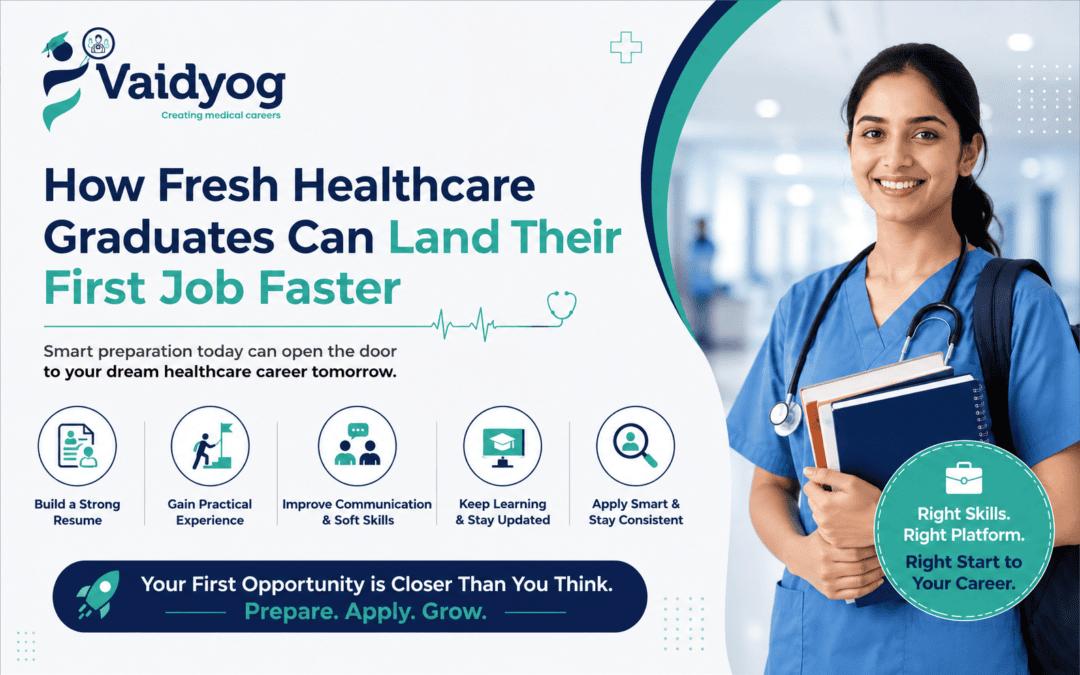
Building a strong resume, gaining practical experience, developing soft skills, expanding your professional network, and staying informed about healthcare trends will significantly improve your chances of securing your first role.
At Vaidyog, we are dedicated to helping fresh healthcare graduates connect with verified employers across hospitals, clinics, diagnostic centers, pharmaceutical companies, and healthcare organizations throughout India. Whether you’re a doctor, nurse, pharmacist, dentist, physiotherapist, laboratory professional, radiology technologist, allied health specialist, or healthcare administrator, Vaidyog simplifies your job search by connecting you with trusted employers and genuine opportunities.
If you’re looking for medical jobs, healthcare careers, hospital jobs, nursing jobs, pharmacy jobs, allied healthcare opportunities, or entry-level healthcare positions, Vaidyog is your trusted platform to discover verified medical jobs and build a successful career in the healthcare industry. Your future starts with the right opportunity—and Vaidyog is here to help you find it faster.
Frequently Asked Questions (FAQs)
1. How can fresh healthcare graduates get their first job?
Start by building a professional resume, gaining practical experience through internships, improving your interview skills, networking with professionals, and applying through trusted healthcare job portals like Vaidyog.
2. What should I include in my healthcare resume as a fresher?
Include your educational qualifications, clinical internships, certifications, technical skills, academic projects, volunteer experience, achievements, and relevant soft skills.
3. Is LinkedIn important for healthcare professionals?
Yes. Many healthcare recruiters actively search LinkedIn for qualified candidates. A complete and optimized profile can significantly increase your visibility.
4. Which certifications are beneficial for fresh healthcare graduates?
Popular certifications include Basic Life Support (BLS), Advanced Cardiac Life Support (ACLS), Infection Control, Patient Safety, Electronic Health Records (EHR), Medical Coding, and Hospital Quality Standards.
5. Where can fresh graduates find verified medical jobs?
Healthcare-specific job portals like Vaidyog provide verified opportunities from hospitals, clinics, diagnostic centers, pharmaceutical companies, and healthcare organizations across India.