Introduction
The healthcare industry is growing at an unprecedented pace. Hospitals are expanding, specialty clinics are opening, diagnostic centers are investing in advanced technologies, and healthcare providers are striving to improve patient outcomes. While this growth creates exciting opportunities, it also presents one of the industry’s biggest challenges—recruiting qualified healthcare professionals quickly.
Finding experienced doctors, skilled nurses, laboratory technicians, pharmacists, radiology professionals, physiotherapists, biomedical engineers, and other allied healthcare professionals has become increasingly competitive. Every vacant position affects patient care, increases the workload on existing employees, and impacts hospital efficiency.
Unlike many industries where vacancies can remain open for weeks without immediate consequences, healthcare organizations cannot afford prolonged recruitment cycles. Every delay can lead to increased waiting times, staff burnout, reduced patient satisfaction, and lost revenue.
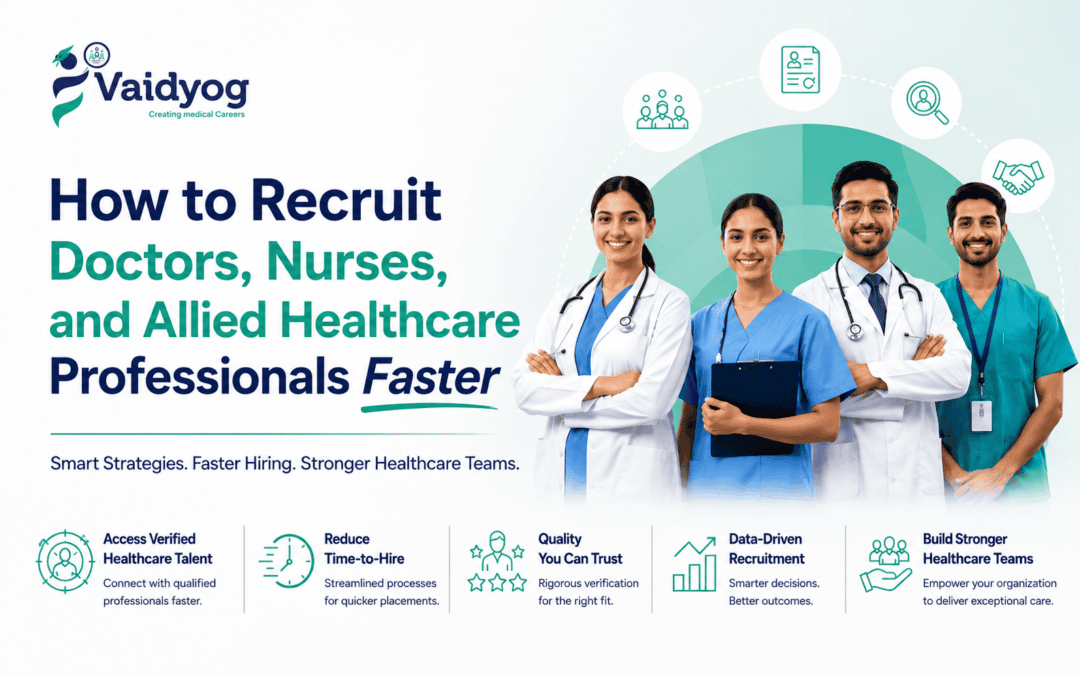
The good news is that hospitals can significantly improve hiring speed by adopting modern recruitment strategies, leveraging healthcare-focused technology, and partnering with specialized healthcare recruitment platforms.
This guide explores why healthcare recruitment takes time, the challenges hospitals face, practical strategies to recruit faster, and how technology is transforming healthcare hiring.
Why Healthcare Recruitment Takes Longer Than Other Industries
Healthcare recruitment is highly specialized. Every candidate must meet strict educational qualifications, licensing requirements, certifications, and clinical competency standards.
Unlike general hiring, healthcare employers must evaluate:
- Academic qualifications
- Professional licenses and registrations
- Clinical experience
- Specialty expertise
- Technical competencies
- Communication skills
- Patient-centered approach
- Availability for shifts
- Compliance with hospital protocols
For senior specialists, consultants, ICU nurses, OT technicians, and emergency medicine professionals, the hiring process becomes even more challenging because experienced talent is limited.
Healthcare organizations also compete with corporate hospitals, government institutions, international recruiters, and medical staffing agencies, making it difficult to secure top professionals quickly.
The Cost of Slow Healthcare Recruitment
Many hospitals underestimate the financial and operational impact of delayed hiring.
A vacant clinical position can result in:
- Increased workload for existing healthcare teams
- Staff fatigue and burnout
- Higher overtime costs
- Reduced patient satisfaction
- Longer patient waiting times
- Lower hospital productivity
- Delayed expansion plans
- Reduced revenue generation
- Increased employee turnover
For critical departments such as ICU, emergency medicine, operation theatres, radiology, pathology, and dialysis units, prolonged vacancies can directly affect patient care quality.
Recruitment is therefore not simply an HR responsibility—it is a strategic function that influences the entire healthcare organization.
Common Challenges in Healthcare Recruitment
Healthcare employers frequently encounter several recruitment challenges.
Limited Availability of Skilled Professionals
Specialized healthcare professionals are in high demand across the country. Hospitals often compete for the same talent pool, making recruitment highly competitive.
Lengthy Screening Processes
Verifying qualifications, certifications, licenses, employment history, and clinical competencies requires time and careful evaluation.
High Competition Among Hospitals
Leading hospitals often recruit aggressively, offering attractive salaries, learning opportunities, and career advancement.
Candidate Drop-Off
Long interview cycles increase the risk of losing qualified candidates to competing employers.
Geographic Challenges
Hospitals located in Tier-2 and Tier-3 cities often struggle to attract experienced healthcare professionals.
Rising Candidate Expectations
Healthcare professionals today look beyond salary. They also consider:
- Workplace culture
- Professional development
- Work-life balance
- Leadership support
- Training opportunities
- Technology adoption
- Career growth
Organizations that fail to communicate these advantages may lose quality candidates.
Strategies to Recruit Doctors, Nurses, and Allied Healthcare Professionals Faster
1. Create Detailed Job Descriptions
The hiring process begins with a well-written job description.
Include:
- Job title
- Department
- Responsibilities
- Required qualifications
- Years of experience
- Skills
- Work location
- Shift timings
- Salary range (if applicable)
- Career growth opportunities
Clear job descriptions reduce irrelevant applications while attracting suitable candidates.
2. Strengthen Your Employer Brand
Healthcare professionals increasingly research employers before applying.
Hospitals should showcase:
- Employee success stories
- Learning programs
- Clinical excellence
- Modern infrastructure
- Awards and accreditations
- Workplace culture
- Employee benefits
- Community healthcare initiatives
A strong employer brand builds trust and improves application rates.
3. Use Specialized Healthcare Recruitment Platforms
General job portals often produce large numbers of applications but may not provide the specialized talent hospitals need.
Healthcare-focused recruitment platforms help organizations connect with:
- Doctors
- Nurses
- Pharmacists
- Laboratory professionals
- Radiology technicians
- Biomedical engineers
- Physiotherapists
- Hospital administrators
- Allied healthcare professionals
This targeted approach significantly reduces screening time and improves hiring quality.
4. Build a Strong Talent Pipeline
Healthcare recruitment should be continuous rather than reactive.
Hospitals should maintain databases of:
- Previous applicants
- Internship candidates
- Nursing graduates
- Resident doctors
- Medical colleges
- Referral candidates
- Former employees
A strong talent pipeline enables faster hiring whenever vacancies arise.
5. Speed Up the Recruitment Process
One of the biggest reasons hospitals lose candidates is slow decision-making.
Best practices include:
- Screen applications daily
- Schedule interviews within 48 hours
- Minimize interview rounds
- Provide quick feedback
- Send offer letters promptly
Fast hiring improves candidate acceptance rates.
6. Implement AI-Powered Recruitment Technology
Modern healthcare recruitment relies heavily on automation.
AI-powered recruitment solutions can:
- Match candidates automatically
- Filter resumes
- Rank applicants
- Reduce manual screening
- Schedule interviews
- Send automated updates
- Track recruitment metrics
Technology reduces administrative work while improving hiring accuracy.
7. Improve Candidate Experience
Healthcare professionals appreciate transparent and respectful recruitment processes.
Ensure candidates receive:
- Timely responses
- Clear interview schedules
- Honest communication
- Regular status updates
- Professional interactions
A positive candidate experience enhances employer reputation and increases offer acceptance.
8. Encourage Employee Referral Programs
Existing employees often know qualified healthcare professionals within their network.
Referral programs:
- Reduce recruitment costs
- Improve candidate quality
- Increase retention
- Speed up hiring
Many hospitals successfully fill critical roles through employee referrals.
9. Partner with Educational Institutions
Collaborating with medical colleges, nursing colleges, and allied health institutes helps hospitals build a steady pipeline of emerging talent.
Benefits include:
- Campus recruitment drives
- Internship programs
- Graduate hiring
- Early talent engagement
- Long-term workforce planning
10. Offer Competitive Compensation and Career Growth
Salary remains important, but career development is equally valuable.
Hospitals should highlight:
- Continuing medical education (CME)
- Certification support
- Leadership opportunities
- Mentorship programs
- Internal promotions
- Skill development initiatives
Candidates are more likely to join organizations that invest in their professional growth.
How Technology Is Transforming Healthcare Recruitment
Digital transformation has revolutionized healthcare hiring.
Modern recruitment technologies include:
- Applicant Tracking Systems (ATS)
- AI-powered candidate matching
- Video interviews
- Automated interview scheduling
- Digital document verification
- Electronic onboarding
- Recruitment analytics dashboards
These solutions reduce hiring time while improving recruitment quality and operational efficiency.
Best Practices for Healthcare Hiring Success
Healthcare organizations that consistently recruit successfully typically follow these practices:
- Maintain updated job descriptions.
- Build long-term relationships with healthcare professionals.
- Invest in employer branding.
- Use data-driven recruitment strategies.
- Shorten interview timelines.
- Leverage AI-powered recruitment tools.
- Create positive candidate experiences.
- Track hiring metrics and continuously improve recruitment processes.
Benefits of Faster Healthcare Recruitment
An efficient recruitment strategy offers measurable advantages for healthcare organizations.
Better Patient Care
Timely hiring ensures uninterrupted patient services and improved treatment outcomes.
Reduced Staff Burnout
Adequate staffing distributes workloads more evenly, improving employee well-being.
Lower Recruitment Costs
Shorter hiring cycles reduce advertising expenses, overtime costs, and vacancy-related losses.
Improved Operational Efficiency
Fully staffed departments operate more smoothly, reducing delays and enhancing productivity.
Higher Employee Retention
Selecting the right professionals and providing a positive hiring experience improves long-term retention.
Stronger Organizational Growth
Healthcare organizations with efficient recruitment processes can expand services, open new departments, and meet increasing patient demand more confidently.
Measuring Recruitment Success
Hospitals should monitor key recruitment metrics to continuously improve hiring performance.
Important KPIs include:
- Time-to-hire
- Time-to-fill
- Cost-per-hire
- Offer acceptance rate
- Employee retention rate
- Candidate satisfaction
- Source of hire
- Quality of hire
- Vacancy rate
Tracking these metrics helps healthcare organizations identify bottlenecks and optimize recruitment strategies.
The Future of Healthcare Recruitment
Healthcare recruitment is evolving rapidly with advancements in artificial intelligence, predictive analytics, automation, and digital hiring platforms. Hospitals that embrace technology while maintaining a people-centric recruitment approach will be better equipped to attract and retain skilled healthcare professionals.
The future will place greater emphasis on verified candidate databases, intelligent talent matching, virtual hiring, skills-based recruitment, and proactive workforce planning. Organizations that adapt to these trends will gain a competitive advantage in securing top healthcare talent.
Conclusion
Recruiting doctors, nurses, and allied healthcare professionals is no longer just about filling vacancies—it is about building resilient, high-performing teams that can consistently deliver exceptional patient care. As the demand for skilled healthcare talent continues to grow, hospitals and healthcare organizations need recruitment strategies that are faster, smarter, and more efficient.
By creating clear job descriptions, strengthening employer branding, building talent pipelines, adopting AI-powered recruitment technology, and streamlining hiring workflows, healthcare providers can significantly reduce recruitment timelines while improving the quality of every hire.
At Vaidyog, we simplify healthcare recruitment by connecting hospitals, clinics, diagnostic centers, and healthcare organizations with verified doctors, nurses, and allied healthcare professionals through a dedicated healthcare recruitment platform. In addition to technology-driven hiring, our medical staffing solutions help healthcare providers quickly address temporary, permanent, and urgent workforce requirements. By combining specialized recruitment expertise with efficient medical staffing services, Vaidyog enables healthcare organizations to build stronger teams, minimize vacancies, and deliver exceptional patient care with confidence.
Frequently Asked Questions (FAQs)
1. Why is healthcare recruitment more challenging than other industries?
Healthcare recruitment involves verifying professional qualifications, licenses, certifications, clinical experience, and specialty skills. The limited availability of experienced professionals and high competition among employers also make the hiring process more complex.
2. How can hospitals reduce their healthcare hiring time?
Hospitals can reduce hiring time by writing clear job descriptions, using healthcare-specific recruitment platforms, building a talent pipeline, implementing AI-powered recruitment tools, and streamlining interview and onboarding processes.
3. What are allied healthcare professionals?
Allied healthcare professionals include laboratory technicians, radiology technicians, physiotherapists, pharmacists, occupational therapists, biomedical engineers, operation theatre technicians, respiratory therapists, and other clinical support professionals who play a vital role in patient care.
4. What is medical staffing in healthcare?
Medical staffing is the process of sourcing and placing qualified healthcare professionals in temporary, permanent, contract, or emergency roles to ensure healthcare organizations maintain adequate workforce levels and uninterrupted patient care.
5. Why should hospitals use a specialized healthcare recruitment platform?
Healthcare recruitment platforms provide access to verified doctors, nurses, and allied healthcare professionals, reducing screening time, improving candidate quality, and accelerating the hiring process compared to general job portals.