
Introduction
Healthcare is often associated with doctors and nurses who provide direct patient care. However, the success of any healthcare system depends on a much broader network of skilled professionals working behind the scenes. Among these essential contributors are paramedical professionals, whose expertise supports diagnosis, treatment, rehabilitation, and emergency care.
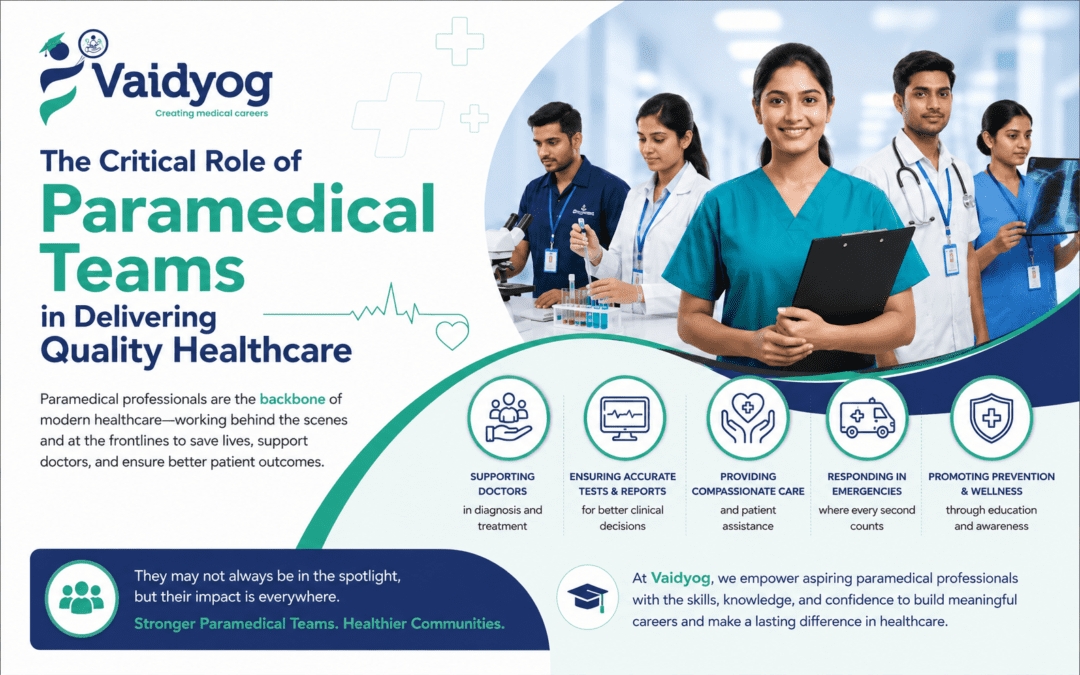
Paramedical teams serve as the backbone of modern healthcare facilities. They bridge the gap between medical science and patient care by operating advanced medical equipment, conducting diagnostic tests, assisting in procedures, and providing specialized healthcare support services. Without their contribution, hospitals, clinics, diagnostic centers, and emergency care units would struggle to deliver timely and effective healthcare services.
As healthcare demands continue to rise across India and globally, the importance of paramedical professionals has never been greater. Their role is crucial in ensuring quality healthcare outcomes, operational efficiency, and patient safety.
Understanding the Role of Paramedical Professionals
Paramedical professionals are trained healthcare workers who provide technical, diagnostic, therapeutic, and emergency support services. They work alongside physicians, nurses, and healthcare administrators to ensure seamless healthcare delivery.
Common paramedical professions include:
- Medical Laboratory Technicians (MLTs)
- Radiology and Imaging Technicians
- Operation Theatre Technicians
- Emergency Medical Technicians (EMTs)
- Physiotherapists
- Dialysis Technicians
- Cardiac Care Technicians
- Anesthesia Technicians
- Optometrists
- Occupational Therapists
- Respiratory Therapists
- Medical Equipment Technicians
Each role contributes uniquely to patient care, making paramedical professionals indispensable members of healthcare teams.
Supporting Accurate Diagnosis
Accurate diagnosis is the foundation of effective medical treatment. Before a doctor can prescribe medication or recommend a treatment plan, reliable diagnostic information is required.
Paramedical professionals working in diagnostic laboratories and imaging departments play a key role in generating this information.
Medical Laboratory Technicians
Laboratory technicians perform critical tests on blood, urine, tissue samples, and other specimens. Their work helps identify:
- Infectious diseases
- Diabetes
- Cancer markers
- Blood disorders
- Kidney and liver conditions
- Hormonal imbalances
Healthcare providers rely heavily on the accuracy of laboratory results when making clinical decisions.
Radiology and Imaging Technicians
Radiology professionals operate advanced diagnostic equipment such as:
- X-ray machines
- CT scanners
- MRI systems
- Ultrasound devices
- Mammography equipment
Their expertise ensures that physicians receive high-quality images needed for precise diagnosis and treatment planning.
Enhancing Patient Care and Safety
Patient safety remains one of the most important priorities in healthcare. Paramedical teams contribute significantly to maintaining high standards of care and minimizing risks.
Their responsibilities often include:
- Monitoring patient conditions
- Maintaining medical equipment
- Assisting in procedures
- Ensuring infection control compliance
- Following safety protocols
- Managing healthcare documentation
By performing these critical functions, paramedical professionals help create a safer environment for patients and healthcare providers alike.
Infection Prevention and Control
In healthcare facilities, preventing infections is essential. Paramedical staff are often responsible for:
- Sterilizing equipment
- Maintaining hygiene standards
- Following biomedical waste management procedures
- Supporting infection control initiatives
Their efforts reduce the risk of healthcare-associated infections and improve patient outcomes.
Strengthening Emergency and Critical Care Services
Emergency situations demand rapid response and specialized expertise.
Paramedical professionals are often the first healthcare providers involved in emergency care. Their quick actions can significantly impact patient survival rates.
Emergency Medical Technicians (EMTs)
EMTs provide pre-hospital emergency care by:
- Assessing patient conditions
- Administering first aid
- Stabilizing injuries
- Managing airway support
- Transporting patients safely
They play a critical role during accidents, cardiac emergencies, natural disasters, and medical crises.
Critical Care Support Teams
Critical care technicians assist in:
- Intensive Care Units (ICUs)
- Cardiac Care Units (CCUs)
- Emergency Departments
- Trauma Centers
Their support ensures that critically ill patients receive continuous monitoring and timely intervention.
Improving Operational Efficiency in Healthcare Facilities
Healthcare facilities operate around the clock and require coordinated teamwork to function efficiently.
Paramedical professionals manage specialized responsibilities that help healthcare organizations optimize resources and improve productivity.
Their contributions include:
- Equipment management
- Diagnostic testing
- Procedure assistance
- Patient monitoring
- Documentation support
- Quality control processes
By handling these technical responsibilities, they enable physicians and nurses to focus on diagnosis, treatment, and patient care.
Reducing Patient Waiting Times
Efficient diagnostic and support services contribute directly to:
- Faster diagnosis
- Quicker treatment initiation
- Reduced patient waiting times
- Improved patient satisfaction
This efficiency enhances the overall healthcare experience.
Adapting to Advanced Healthcare Technologies
Technology has transformed healthcare delivery.
Modern hospitals increasingly rely on sophisticated medical devices, digital systems, and automated diagnostic platforms.
Paramedical professionals are responsible for operating and managing technologies such as:
- Digital imaging systems
- Automated laboratory analyzers
- Patient monitoring systems
- Dialysis machines
- Ventilators
- Telemedicine platforms
- Electronic Health Records (EHRs)
Their technical expertise ensures these systems function effectively and contribute to better patient outcomes.
The Need for Continuous Learning
As healthcare technology evolves, paramedical professionals must continually update their skills through:
- Professional certifications
- Continuing education programs
- Technology training workshops
- Specialized healthcare courses
Continuous learning helps them remain effective in rapidly changing healthcare environments.
Supporting Rehabilitation and Long-Term Recovery
Healthcare extends beyond diagnosis and treatment.
Many patients require rehabilitation services to regain mobility, independence, and quality of life.
Paramedical professionals such as physiotherapists and occupational therapists help patients recover from:
- Surgeries
- Sports injuries
- Neurological disorders
- Stroke recovery
- Orthopedic conditions
- Chronic illnesses
Their work significantly improves patient rehabilitation outcomes and long-term wellness.
Addressing India’s Growing Healthcare Needs
India’s healthcare sector is experiencing significant expansion due to:
- Population growth
- Increased healthcare awareness
- Rising chronic disease prevalence
- Expansion of private healthcare facilities
- Growth of diagnostic centers
- Medical tourism development
This growth has created an increasing demand for skilled paramedical professionals across the country.
Healthcare organizations require qualified personnel who can support expanding patient volumes while maintaining quality standards.
Career Opportunities in the Paramedical Sector
The paramedical field offers diverse and rewarding career opportunities.
Professionals can find employment in:
- Multi-specialty hospitals
- Diagnostic laboratories
- Imaging centers
- Rehabilitation clinics
- Emergency response services
- Specialty healthcare facilities
- Home healthcare services
- Research institutions
- Medical device companies
Benefits of a Career in Paramedical Services
Some advantages include:
- Strong job demand
- Career stability
- Competitive compensation
- Opportunities for specialization
- Professional growth
- Meaningful impact on patient lives
As healthcare infrastructure continues to expand, career prospects for paramedical professionals are expected to grow substantially.
The Future of Paramedical Healthcare
The future of healthcare will increasingly depend on multidisciplinary collaboration.
Emerging trends such as:
- Artificial Intelligence in diagnostics
- Telemedicine
- Remote patient monitoring
- Personalized medicine
- Digital health technologies
will further elevate the role of paramedical professionals.
Healthcare organizations will continue seeking skilled individuals capable of managing advanced technologies while maintaining patient-centered care.
Conclusion: Growing Opportunities in Paramedical Jobs
Paramedical professionals are essential to the success of modern healthcare systems. Their expertise supports accurate diagnosis, efficient treatment, emergency response, rehabilitation, and healthcare technology management. Without their contributions, delivering safe, effective, and high-quality patient care would be impossible.
As India’s healthcare industry continues to expand, the demand for skilled paramedical professionals is growing rapidly. Hospitals, diagnostic centers, specialty clinics, rehabilitation facilities, and healthcare organizations are actively hiring qualified candidates across various specialties.
For individuals seeking meaningful and stable healthcare careers, paramedical jobs offer excellent opportunities for professional growth, skill development, and long-term success. Whether you are a laboratory technician, radiology technician, operation theatre technician, physiotherapist, dialysis technician, or emergency medical technician, the healthcare sector offers numerous pathways to build a rewarding career.
At VAIDYOG, we help connect talented healthcare professionals with the right paramedical jobs across India. By bridging the gap between healthcare employers and qualified candidates, VAIDYOG supports career growth while helping healthcare organizations build stronger and more effective teams.
Frequently Asked Questions (FAQs)
1. What are paramedical professionals?
Paramedical professionals are trained healthcare workers who provide diagnostic, technical, therapeutic, and emergency support services to assist doctors and nurses in delivering patient care.
2. What are the most common paramedical jobs?
Common paramedical jobs include Medical Laboratory Technician, Radiology Technician, Operation Theatre Technician, Dialysis Technician, Emergency Medical Technician, Physiotherapist, Cardiac Care Technician, and Anesthesia Technician.
3. Why are paramedical professionals important in healthcare?
They support diagnosis, treatment, rehabilitation, emergency response, and patient safety, making them critical contributors to healthcare delivery.
4. Is there a demand for paramedical professionals in India?
Yes. India’s growing healthcare sector has created strong demand for skilled paramedical professionals across hospitals, laboratories, clinics, and healthcare organizations.
5. What qualifications are required for paramedical jobs?
Requirements vary by specialization but generally include diploma, certificate, undergraduate, or degree programs in relevant paramedical disciplines.
6. Which industries hire paramedical professionals?
Hospitals, diagnostic centers, rehabilitation facilities, healthcare startups, medical device companies, research institutions, and home healthcare providers hire paramedical professionals.
7. What skills are important for a successful paramedical career?
Technical expertise, communication skills, attention to detail, teamwork, patient care knowledge, and adaptability to healthcare technologies are essential.
8. Are paramedical careers a good long-term option?
Yes. Paramedical careers offer job stability, professional growth, specialization opportunities, and strong demand due to the continuous expansion of healthcare services.
9. How can healthcare organizations find qualified paramedical professionals?
Healthcare employers can partner with specialized healthcare recruitment platforms like VAIDYOG to connect with skilled and verified paramedical talent.
10. How can I find paramedical jobs in India?
You can explore opportunities through healthcare recruitment platforms, hospital career portals, professional networks, and specialized healthcare job providers such as VAIDYOG.