The healthcare industry is experiencing a period of unprecedented transformation. Rapid technological advancements, changing patient expectations, workforce shortages, and the growing demand for specialized healthcare services are reshaping how healthcare organizations operate. Amid these changes, one critical area undergoing significant evolution is healthcare recruitment.
Healthcare organizations today face increasing challenges in finding, hiring, and retaining qualified professionals. From doctors and nurses to allied healthcare staff, technicians, administrators, and healthcare support professionals, the demand for skilled talent continues to rise. Traditional recruitment methods are no longer sufficient to address the complexities of modern healthcare staffing.
Digital recruitment technologies have emerged as powerful solutions, helping healthcare organizations streamline hiring processes, improve candidate experiences, and build stronger workforces. As the healthcare landscape evolves, recruitment strategies must evolve alongside it.
The Shift from Traditional to Digital Recruitment
For decades, healthcare recruitment primarily relied on newspaper advertisements, employee referrals, recruitment agencies, career fairs, and walk-in interviews. While these methods were effective in their time, they often involved lengthy hiring cycles, high costs, and limited access to talent pools.
Digital recruitment has transformed this process by enabling organizations to connect with candidates through online platforms, professional networks, and specialized healthcare job portals. Recruiters can now reach qualified professionals across cities, states, and even countries within minutes.
Online applications, automated workflows, and digital communication tools have significantly reduced the time required to fill vacancies. This shift allows healthcare organizations to respond more quickly to staffing needs while ensuring a better match between candidates and available roles.
Addressing the Growing Healthcare Workforce Shortage
Healthcare workforce shortages remain one of the industry’s most pressing challenges. Aging populations, increasing healthcare demands, and expanding medical facilities have created a greater need for qualified healthcare professionals.
According to various global healthcare workforce studies, hospitals and healthcare providers frequently struggle to fill critical positions in nursing, allied healthcare, diagnostics, and specialized medical fields. Recruitment delays can impact patient care, operational efficiency, and organizational growth.
Digital recruitment platforms help address these shortages by expanding access to talent, improving visibility for job openings, and enabling faster connections between employers and candidates.
The Rise of Specialized Healthcare Job Portals
Unlike generic job boards that cater to multiple industries, specialized healthcare recruitment platforms focus exclusively on healthcare careers. These platforms understand the unique requirements of healthcare hiring, including qualifications, certifications, licenses, and clinical experience.
Healthcare organizations can efficiently target professionals such as:
- Doctors and Physicians
- Nurses
- Pharmacists
- Laboratory Technicians
- Radiology Technicians
- Physiotherapists
- Biomedical Engineers
- Hospital Administrators
- Healthcare Managers
- Medical Sales Professionals
- Emergency Medical Technicians
- Dialysis Technicians
- Operation Theatre Technicians
For job seekers, specialized platforms provide access to highly relevant opportunities while reducing the time spent searching through unrelated listings.
Artificial Intelligence and Smart Candidate Matching
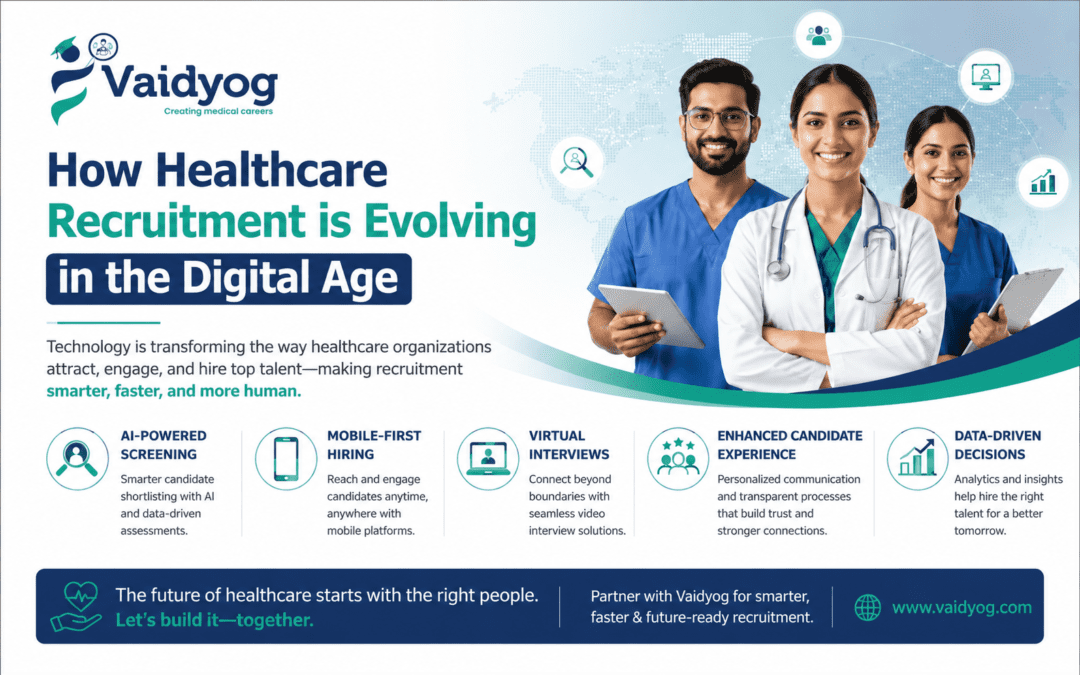
Artificial Intelligence (AI) is rapidly transforming healthcare recruitment by automating many of the most time-consuming hiring tasks.
AI-powered recruitment systems can:
- Screen resumes automatically
- Match candidates with suitable roles
- Identify skill gaps
- Rank applicants based on qualifications
- Predict candidate-job fit
- Reduce unconscious bias in initial screening
By analyzing large volumes of candidate data, AI helps recruiters identify top talent more efficiently. This not only saves time but also improves hiring accuracy and quality.
For healthcare professionals, AI-driven recommendations can present career opportunities that align closely with their experience, interests, and long-term goals.
Virtual Hiring and Remote Interviews
The adoption of virtual interviews has become a permanent feature of modern recruitment. Video conferencing platforms have made it possible for healthcare organizations to conduct interviews regardless of geographic location.
Virtual recruitment offers several advantages:
- Faster scheduling
- Reduced travel expenses
- Greater accessibility for candidates
- Increased recruitment efficiency
- Ability to hire across multiple regions
Healthcare employers can now assess candidates remotely while maintaining a structured and professional hiring process. This flexibility has become particularly valuable for organizations seeking specialized talent in competitive markets.
Data-Driven Recruitment Decisions
One of the most significant benefits of digital recruitment is access to recruitment analytics.
Modern hiring platforms allow organizations to track key metrics such as:
- Time-to-fill
- Cost-per-hire
- Source of hire
- Application conversion rates
- Candidate quality
- Employee retention rates
These insights help healthcare organizations make informed decisions about workforce planning and recruitment strategies.
Rather than relying solely on intuition, recruiters can leverage data to optimize hiring processes, allocate resources effectively, and improve long-term workforce outcomes.
Employer Branding in Healthcare Recruitment
Today’s healthcare professionals evaluate employers more carefully than ever before. Beyond salary and benefits, candidates want to understand workplace culture, professional development opportunities, leadership quality, and organizational values.
As a result, employer branding has become a critical component of healthcare recruitment.
Healthcare organizations are increasingly investing in:
- Social media presence
- Employee testimonials
- Career websites
- Professional networking platforms
- Thought leadership content
- Workplace culture initiatives
A strong employer brand helps organizations attract top talent while building trust among potential candidates.
Mobile Recruitment and Candidate Experience
The modern workforce expects convenience and accessibility throughout the job application process. Many healthcare professionals search for opportunities using smartphones and mobile devices.
Mobile-friendly recruitment platforms enable candidates to:
- Browse jobs anytime
- Apply quickly
- Upload resumes digitally
- Receive notifications instantly
- Track application progress
Improving candidate experience not only increases application rates but also enhances employer reputation. Candidates are more likely to engage with organizations that offer simple and user-friendly recruitment processes.
The Role of Automation in Healthcare Hiring
Automation is helping healthcare recruiters manage high volumes of applications while maintaining efficiency.
Automated systems can:
- Schedule interviews
- Send follow-up communications
- Manage candidate databases
- Track hiring progress
- Generate recruitment reports
By reducing administrative workload, recruiters can focus more on relationship-building, candidate engagement, and strategic workforce planning.
Future Trends in Healthcare Recruitment
The future of healthcare recruitment will be driven by innovation and digital transformation. Emerging trends include:
Predictive Hiring Analytics
Organizations will increasingly use predictive analytics to anticipate workforce needs and proactively recruit talent.
AI-Powered Skill Assessments
Advanced technologies will evaluate candidates based on real-world competencies rather than relying solely on resumes.
Remote and Hybrid Healthcare Opportunities
Telemedicine and digital healthcare services are creating new categories of healthcare jobs that require innovative recruitment approaches.
Personalized Candidate Journeys
Recruitment platforms will deliver customized experiences tailored to individual career goals and professional interests.
Workforce Planning Integration
Recruitment strategies will become more closely aligned with long-term organizational growth plans.
Healthcare organizations that embrace these technologies will gain a competitive advantage in attracting and retaining high-quality talent.
Conclusion
The healthcare recruitment landscape is evolving faster than ever before. Digital platforms, artificial intelligence, automation, data analytics, and virtual hiring technologies are transforming how healthcare organizations connect with talent.
As demand for skilled healthcare professionals continues to grow, healthcare jobs are becoming increasingly diverse, specialized, and technology-driven. Organizations must adopt modern recruitment strategies to successfully attract, hire, and retain qualified professionals in an increasingly competitive market.
At Vaidyog, we are committed to simplifying healthcare hiring by connecting healthcare employers with the right talent and helping professionals discover meaningful healthcare jobs that match their skills, experience, and career aspirations. Through innovative recruitment solutions and deep industry expertise, Vaidyog continues to support the healthcare sector in building strong, future-ready workforces while empowering healthcare professionals to advance their careers with confidence.
Frequently Asked Questions (FAQs)
1. Why is digital recruitment important in healthcare?
Digital recruitment helps healthcare organizations hire faster, reach a larger talent pool, improve candidate matching, and reduce recruitment costs.
2. How does AI improve healthcare recruitment?
AI automates resume screening, identifies qualified candidates, improves matching accuracy, and helps recruiters make faster hiring decisions.
3. What are healthcare job portals?
Healthcare job portals are specialized recruitment platforms that focus exclusively on healthcare careers, making it easier for employers and candidates to connect.
4. What healthcare roles are most commonly recruited online?
Doctors, nurses, pharmacists, laboratory technicians, radiology technicians, physiotherapists, biomedical engineers, healthcare administrators, and medical sales professionals are among the most frequently recruited roles online.
5. How do virtual interviews benefit healthcare hiring?
Virtual interviews reduce travel costs, speed up recruitment, increase flexibility, and allow organizations to access talent from multiple locations.
6. What is employer branding in healthcare recruitment?
Employer branding refers to how an organization presents its culture, values, work environment, and career opportunities to attract top healthcare talent.